[Call for proposals IDEASHARE & DATASHARE 2025]

The FRB-CESAB, in partnership with the HEIRS (hub for Human Evolution Research Synthesis), with the support of the PNDB, are launching a call to fund two types of complementary groups: the IdeaShare and the DataShare. This call aims to advance biodiversity research by supporting the generation of innovative interdisciplinary approaches and the development of accessible high quality datasets, respectively.


  • The IdeaShare emphasizes the creation of new concepts, models, and methods through interdisciplinary collaboration, bringing together biodiversity experts with specialists from other fields to explore new perspectives and frameworks.


  • The DataShare focuses on accelerating the assembly, curation, harmonization, and open sharing of biodiversity-related datasets, ensuring that they are accessible and reusable for future syntheses and analyses.


The work achieved within each group can be seen as a preliminary – but not mandatory – step before submitting a research proposal to more ‘classical’ calls from Biodiversity Synthesis Centres (e.g. CESAB, sDiv, NCEAS) or elsewhere.


Read the full description of the call

Will be funded under this call:

  • Three generic groups by the FRB-CESAB with no restrictions on the biodiversity topics ;
  • One thematic group, co-funded by the FRB-CESAB and the HEIRS (hub for Human Evolution Research Synthesis), which will focus on Biodiversity and Human Evolution.


Each proposal can be submitted in either the DataShare or IdeaShare format. Each group will consist of maximum 8 (IdeaShare) and 10 (DataShare) members and will be funded for two years (three weeks of meetings). The groups will receive scientific, technical and administrative support from the FRB-CESAB team, administrative support from the HEIRS team (thematic group), and technical support from PNDB (DataShare groups).


Find here the full description of the call: 

IdeaShare

DataShare


Three selected projects


  • CROPTRAITS

coordinated by Lucie MAHAULT (INRAE, France) and Samuel PIRONON (Queen Mary Univ. of London, UK)

Building a database on the functional traits of cultivated species


  • FUNDIVA

coordinated by Pol CAPDEVILA (Univ. of Barcelona, Spain) and Sandrine PAVOINE (MNHN, France)

Towards a framework to quantify and explain the drivers of changes in functional diversity


  • SILK

coordinated by Giulia MATTALIA (Univ. of Barcelona, Spain) and Guillaume ODONNE (CNRS LEEISA, French Guiana)

Supporting Indigenous and local knowledge through global data on biodiversity use

[Call for proposals FRB-CESAB 2024]

Through its Center for Biodiversity Synthesis and Analysis (CESAB), the French Foundation for Biodiversity Research opens its 2022 call for research proposals, to fund three innovative projects relating to the synthesis of ideas and concepts and/or the analysis of existing data. The main aim of these projects should be to improve scientific knowledge of biodiversity and demonstrate how we can use this knowledge to better protect it. The submitted projects can deal with any topic related to biodiversity, in the fields of natural sciences and/or human and social sciences.


The projects (in pdf format – 1 single file) must be submitted no later than June 3, 2024 on the science call platform :


Submit your application here


The selected projects will be funded for three years, including: the recruitment of a post-doctoral fellow for 24 months, the organization of five meetings of the working group at CESAB and the promotion and publication of the results. CESAB will also provide logistical, technical and administrative support all along the project.


Members of CESAB projects share their scientific expertise, available data and modeling tools to answer a wide range of biodiversity questions at all spatial and temporal scales. Composed of a maximum of 12 experts, each selected working group must be coordinated by a recognized scientist affiliated with a French scientific research organization or university.


The two selected projects are:


  • Div4Drought Tree diversity effects on forest drought resilience: a mechanistic approach to reconcile divergent observations – coordinated by GUILLEMOT Joannès (CIRAD, France) and GROSSIORD Charlotte (EPFL, Switzerland).


  • FishMIP-OSPThe Ocean System Pathways (OSPs): a new scenario and simulation framework to investigate the future of the world fisheries – coordinated by MAURY Olivier (IRD, France) and TITTENSOR Derek (Dalhousie Univ, Canada).

[FRB-CESAB ITTECOP – call for proposals – 2024]


The research and innovation service within the ministry of ecological transition in charge of the national programme ITTECOP, and in partnership with the ADEME, will launch, in April 2024, a new call for proposals under the theme: “Impacts of human infrastructures (transport and renewable energy production) on biodiversity”.


The project seeks the analysis of sets of already acquired data which can be gathered and constructed (from dispersed data sets, data available in the literature, etc.) during the project with the following objectives, among others:  

  • Assessing the impacts of these infrastructures on some facets of biodiversity (genetic, specific, functional or ecosystemic), all taxonomic groups being potentially concerned; 
  • Determining how the design of the infrastructures can affect biodiversity based on existing biodiversity, management of natural environments and wildlife, and surrounding territories; 
  • Evaluating how the management of infrastructures and their “naturalized” part can influence these impacts in interaction with the surrounding natural environments; 
  • Identifying and analyzing the economic, socio-technical and political factors that contribute to the deployment of these infrastructures and the degree to which they take biodiversity into account.


A project has been funded for a duration of 3 years under this call, namely the ESEB project – Impacts of European solar energy infrastructure on biodiversity: integrating existing knowledge to enable Nature Positive management and financial investments – coordinated by Alona ARMSTRONG (University of Lancaster, UK) and Armin BISCHOFF (University of Avignon, FRA).


Find out more about ITTECOP


Read the full text of the call


Projects (in pdf format – 1 single file) must be sent no later than June 13 2024 by email to cesab@fondationbiodiversite.fr

[Call for proposals FRB-MTE-OFB 2023] Anthropogenic pressures and impacts on terrestrial biodiversity

As part of the implementation of the national “terrestrial biodiversity monitoring” programme carried outby the Ministry of Ecological Transition (MTE) and the the French Biodiversity Office (OFB), the French Foundation for Biodiversity Research (FRB) is launching, for the third consercutive year, the call for proposals “Anthropogenic pressures and impacts on terrestrial biodiversity“. The call aims to characterise the links between pressures of human activities and their impacts on terrestrial biodiversity.


The results of the research funded by the programme should help to strengthen the actions of society as a whole, to halt the decline of biodiversity and promote sustainable human development. 


Projects should have at least one of the two following goals:

  • Characterising links between pressure and impacts of human activities on terrestrial biodiversity (highlighting variables/parameters linked to the principle anthropogenic factors of biodiversity change/loss);
  • Identifying gaps in current monitoring of human pressures or their impacts (metrics, indicators, spatial distribution, temporal frequency, types of pressure, type of biodiversity).


Human activities and direct or indirect pressures that have implications for terrestrial biodiversity on a territorial scale will be considered (i.e. pressures that have global impacts, such as climate change, cannot be considered on their own, unless they are coupled with other pressures). The geographical framework of this call concerns terrestrial biodiversity, including (but not limited to) French metropolitan and overseas territories. Only pressures that have a significant impact on the biodiversity present on French territory will be considered.


This call for proposals will allow the funding of:

  • 1 to 2 SYSTEMATIC REVIEW projects of two years– these projects must present an inventory of human practices that have an impact on biodiversity and a summary of the state of knowledge on the impacts considered.
    • contact: Joseph LANGRIDGE – Mail

    • Proposal deadline: 19th June 2023, 1PM CEST

    • Results: Beginning of October 2023

  • 3 data SYNTHESIS projects of three years– these projects should develop syntheses of ideas and/or concepts, analyses of existing data, and should focus on factors affecting the state, evolution and dynamics of biodiversity.
    • contact: FRB-Cesab – Mail
    • Pre-proposal deadline: 19th June 2023, 1PM CEST

    • Proposal deadline: 15th December 2023, 1PM CEST
    • Results: End of March 2024

    •  
  • 4 to 6 one-year SYNERGY projects– these projects should provide complementary answers to a question that emerges from a research project that has been finalized or is underway, and should help stakeholders with indicators and practices to be promoted or abandoned to preserve biodiversity.
    • contact: Coline LEANDRE – Mail
    • Proposal deadline: 19th June 2023, 1PM CEST

    • Results: Beginning of October 2023


Find here the full description of the call (FR). Projects must be coordinated by a researcher affiliated to a French research institute, and submitted within the given deadlines on the Sciencescall platforms dedicated to each type of project. Project leaders can apply to several types of projects.


Please request here the (pre-)proposal form.


Submission of your (pre-)proposal: 

[Call for proposals DATASHARE 2023]

The aim of this DATASHARE joint call is to accelerate the sharing of open-access and large scale ‘novel’ biodiversity related datasets. This call complements classical biodiversity synthesis calls, which aim at fostering the analysis of existing data and the synthesis of ideas and concepts, with a specific focus on data compilation and sharing. It can be considered as a preliminary step, but not mandatory, before submitting a research proposal to a classical biodiversity synthesis call (e.g. CESAB, sDiv, NCEAS). 


Will be considered any dataset of ecological value such as occurrence, abundance, genomic, phylogenetic, functional, biogeochemical, biodiversity related data on any functions, taxa, communities, or ecosystems, anywhere on Earth and at any time. Socio-economic and/or environmental data will also be considered if clearly linked to the above mentioned biodiversity related data. Cross-level datasets combining different levels of biodiversity will be most appreciated.


For its second 2023 edition, the DATASHARE call will fund four 2-years projects:


  • Dynamite, coordinated by Julie MEILLAND (University of Bremme, Germany) and Olivier SULPIS (CNRS, France)

DYNAMics of the production and export of aragonITE shells


  • Fairwood, coordinated by Cyril RATHGEBER (INRAE, France) and Patrick FONTI UK (WCL, CHE)

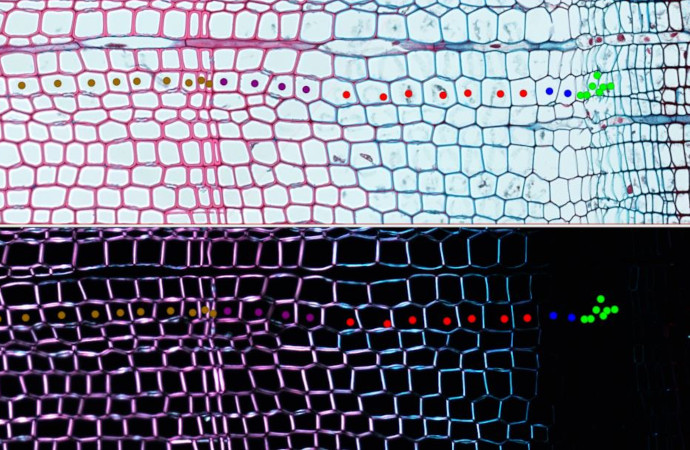
Development of an international database based on FAIR principles to host xylogenesis data and improve understanding of wood formation and woody biomass production in the face of climate change


  • FARsex, coordinated by Veronika BOKONY (HUN-REN Centre for Agricultural Research, Hungary) and Benjamin GEFFROY (IFREMER, France)

Fish, Amphibian, and Reptile Sex Ratios under climate change scenarios


  • InvaHealth, coordinated by Christophe DIAGNE (IRD, France) and Guillaume LATOMBE (University of Edimburg, UK)

Global human health costs from biological invasions


Each working-group must:

  • be composed of a maximum of ten members (including the PIs);
  • be international, well-balanced and diverse in terms of gender, range of expertise and career stage; 
  • include at least one person identified as the responsible for the management of data who will be in direct interaction with the CESAB data scientists.


The groups are expected to meet at CESAB three times over the 2-year duration of the project, during 5-day sessions. They are also expected to organize a one-week virtual meeting and regular short virtual meetings throughout the project duration. They will receive support from a dedicated data scientist based at the CESAB for database conceptualization, design, compilation and potential dissemination. The data scientist will be hired by the FRB-CESAB for two years and will work exclusively with the four funded projects.

Improved transnational monitoring of biodiversity and ecosystem change for science and society

The upcoming Biodiversa+ call for transnational projects “Improved transnational monitoring of biodiversity and ecosystem change for science and society” will be officially launched on September 8th, 2022.


It will cover the 3 non-mutually exclusive research themes:

  • Innovation and harmonisation of methods and tools for collection and management of biodiversity monitoring data
  • Addressing knowledge gaps on biodiversity status, dynamics, and trends to reverse biodiversity loss
  • Making use of available biodiversity monitoring data


A 2-steps application procedure will include the online submission (in English) of pre-proposals early November 2022 and full proposals early April 2023 for evaluation by an independent committee based on the following criteria:

  • Step 1: fit to the scope of the Call, novelty of the research, and impact
  • Step 2: scientific excellence, quality and efficiency of the implementation and impact (including expected policy/societal impacts and stakeholder engagement).


Research consortia will have to include teams from a minimum of 3 countries participating in the Call, including 2 from EU Member States or EU Associated Countries.

Detailed instructions regarding the submission procedure, the eligibility and evaluation criteria etc. will be published at the official launch of the Call early September 2022.


Further information and resources

Applicants looking for a partner or a project to join can use the Biodiversa+ Partner Search Tool.

To go further and get ready, applicants can consult:


Interested applicants are invited to regularly consult the Biodiversa+ website and register to the Biodiversa+ mailing list to be kept updated on latest information on this future major research funding opportunity.

Partners of the call

A global budget of over 40 million euros has been provisionally reserved for the call and at this stage, the following 33 countries have expressed a preliminary interest in participating in the call: Austria, Belgium, Brazil, Bulgaria, Czech Republic, Denmark, Estonia, Finland, France, Germany, Greece, Hungary, Ireland, Israel, Italy, Ivory Coast, Latvia, Lithuania, Moldova, Morocco, Norway, Poland, Portugal, Romania, Slovakia, Slovenia, South Africa, Spain, Sweden, Switzerland, Taiwan, The Netherlands, Tunisia and Turkey.

The updated list of potential participating countries will be published on the Biodiversa+ website.


[Call for proposals DATASHARE 2022]

The aim of this DATASHARE joint call is to accelerate the sharing of open-access and large scale ‘novel’ biodiversity related datasets. This call complements classical biodiversity synthesis calls, which aim at fostering the analysis of existing data and the synthesis of ideas and concepts, with a specific focus on data compilation and sharing. It can be considered as a preliminary step, but not mandatory, before submitting a research proposal to a classical biodiversity synthesis call (e.g. CESAB, sDiv, NCEAS). 


Will be considered any dataset of ecological value such as occurrence, abundance, genomic, phylogenetic, functional, biogeochemical, biodiversity related data on any functions, taxa, communities, or ecosystems, anywhere on Earth and at any time. Socio-economic and/or environmental data will also be considered if clearly linked to the above mentioned biodiversity related data. Cross-level datasets combining different levels of biodiversity will be most appreciated.


For its first 2022 edition, the DATASHARE joint call will fund two 2-years projects.


Find here the full description of the call.


Please fill this form to receive the proposal application.


Projects must be coordinated by a researcher affiliated to a French research institute and applications should be sent to cesab@fondationbiodiversite.fr on the 22/09/2022 at 13:00 CEST at the latest.


Each working-group must:

  • be led by two principal investigators (PIs) with at least one PI associated with a laboratory affiliated with BiodivOc and/or Labex TULIP
  • be made of maximum ten members (including the PIs) and include at least four members from laboratories affiliated with BiodivOc and/or Labex TULIP
  • be international, well-balanced and diverse in terms of gender, range of expertise and career stage; 
  • include at least one person identified as the responsible for the management of data who will be in direct interaction with the CESAB data scientists.


The groups are expected to meet at CESAB three times over the 2-year duration of the project, during 5-day sessions. They are also expected to organize a one-week virtual meeting and regular short virtual meetings throughout the project duration.


Two projects have been selected:


  • Islets


ISland Leaf Ecophysiological Trait Synthesis.

Principal investigators: Kasey BARTON (Hawaii University, United States), et Claire FORTUNEL (IRD, France)


  • Phenofish


Creating a global database of fish functional traits: integrating physiology and ecology across aquatic ecosystems.

Principal investigators: Sébastien BROSS (Toulouse University, France), et Nicolas LOISEAU (CNRS, France)

[Call for proposals FRB-MTE-OFB 2022] Impacts on terrestrial biodiversity in the Anthropocene

As part of the implementation of the national “terrestrial biodiversity monitoring” programme carried out by the French Biodiversity Office (OFB), which aims to measure, identify and monitor the influence of human activities on biodiversity and the best practices to be promoted, the Ministry of Ecological Transition (MTE) and the French Foundation for Research on Biodiversity (FRB) are launching the 2022 call for research projects on the “Impacts on terrestrial biodiversity in the Anthropocene ». The call aims to characterize the positive, negative or non-existent impacts of human activities and induced pressures on the state and dynamics of terrestrial biodiversity.

The results of the research funded by the programme should help to strengthen the actions of society as a whole, to halt the decline of biodiversity and promote sustainable human development. 


Projects should focus on at least one of these three themes:

  • highlight links between human pressures and the state of biodiversity;
  • characterize the links between pressures and impacts using new data processing technologies, new indicators, new protocols, etc. ;
  • response to gaps in current monitoring of human pressures or their impacts (spatial distribution, temporal frequency, types of pressure, type of biodiversity).


Human activities and direct or indirect pressures that have implications for terrestrial biodiversity on a territorial scale will be considered (i.e. pressures that have global impacts, such as climate change, cannot be considered on their own, unless they are coupled with other pressures). The geographical framework of this call concerns terrestrial biodiversity, including (but not limited to) French metropolitan and overseas territories. Only pressures that have a significant impact on the biodiversity present on French territory will be considered.


This call for proposals will allow the funding of:

  • 3 data SYNTHESIS projects of three years– these projects should develop syntheses of ideas and/or concepts, analyses of existing data, and should focus on factors affecting the state, evolution and dynamics of biodiversity.
    • Selected projects:
      • Discar – Population consequences of human DISturbance on small CARnivores ; Olivier Gimenez (CNRS) and Sandrine Ruete (OFB),
      • DragonDragonflies as bellwether for the human impact on interface ecosystems ; Colin Fontaine (CNRS) and Reto Schmuki (UK Centre for Ecology and Hydrology),
      • Motiver – Developing agri-environmental Indicators to MOnitor The Impact of human-driven landscape changes on biodiVERsity in European farmland ; Gaël Caro (Univ de Lorraine) and Ronan Marrec (Univ de Picardie)


  • 4 to 6 one-year SYNERGY projects– these projects should provide complementary answers to a question that emerges from a research project that has been finalized or is underway, and should help stakeholders with indicators and practices to be promoted or abandoned to preserve biodiversity.
    • 4 selected projects:
      • ComepiCOmprendre les patrons de biodiversité et leurs impacts fonctionnels, MEsurer des indicateurs pour PIloter les habitats par la gestion anthropique ; Anne BONNIS (CNRS)
      • IndicatorsPlant reproductive strategies as new diversity indicators – proof of concept in agricultural landscapes ; Sylvain GLEMIN (CNRS)
      • PppirecPollinisateurs, Pesticides, et Paysages : Indicateurs de Réponses, des Espèces aux Communautés ; Nicolas DEGUINES (CNRS, Université de Poitiers)
      • RodexpoAnticoagulant rodenticides in rodent communities sampled along a gradient of forest anthropisation : exposure and resistance ; Virginie LATTARD (Vet-Agrosup)


  • 1 to 2 SYSTEMATIC REVIEW projects of two years– these projects must present an inventory of human practices that have an impact on biodiversity and a summary of the state of knowledge on the impacts considered.
    • 2 selected projects:
      • DesybelA SYstematic review on the impact of anthropogenic noise on terrestrial biodiversity ; Yorick REYJOL (MNHN)
      • Tres-PraticTrait-based responses of soil fauna to agricultural practices & agricultural management strategies: a systematic review and meta-analysis ; Mickael HEDDE (Inrae)


Find here the full description of the call. Projects must be coordinated by a researcher affiliated to a French research institute, and submitted within the given deadlines on the Sciencescall platforms dedicated to each type of project. Project leaders can apply to several types of projects.


Please request here the (pre-)proposal form.


Submission of your (pre-)proposal: 

[Call for proposals FRB-CESAB 2022]

Through its Center for Biodiversity Synthesis and Analysis (CESAB), the French Foundation for Biodiversity Research opens its 2022 call for research proposals, to fund three innovative projects relating to the synthesis of ideas and concepts and/or the analysis of existing data. The main aim of these projects should be to improve scientific knowledge of biodiversity and demonstrate how we can use this knowledge to better protect it. The submitted projects can deal with any topic related to biodiversity, in the fields of natural sciences and/or human and social sciences.


The selected projects will be funded for three years, including: the recruitment of a post-doctoral fellow for 24 months, the organization of six meetings of the working group at CESAB and the promotion and publication of the results. CESAB will also provide logistical, technical and administrative support all along the project.


Members of CESAB projects share their scientific expertise, available data and modeling tools to answer a wide range of biodiversity questions at all spatial and temporal scales. Composed of a maximum of 14 experts, each selected working group must be coordinated by a recognized scientist affiliated with a French scientific research organization or university.


Three projects have been selected:


  • Bioforest


Interactions between tree Biodiversity, Forest dynamics and climate in managed tropical forests: a pan tropical approach.

Principal Investigators: Maria PEÑA-CLAROS (Wageningen University, NL), et Camille PIPONIOT (Cirad, France)


  • Food-Webs


Food-webs in the Anthropocene: a stable isotope synthesis to understand the global response of freshwater ecosystems.

Principal Investigators: Julien CUCHEROUSSET (Cirad, France), et Michelle JACKSON (Oxford University, UK)


  • Rivage


Revisit Island Vulnerability during the Anthropocene Geologic Era.

Principal Investigators: Céline BELLARD (Paris-Saclay University, France), et Daniel KISSLING (Amsterdam University, NL)

[Call for proposals FRB-MTE-OFB 2021] Impacts on terrestrial biodiversity in the Anthropocene

As part of the implementation of the national “terrestrial biodiversity monitoring” programme carried out by the French Biodiversity Office (OFB), which aims to measure, identify and monitor the influence of human activities on biodiversity and the best practices to be promoted, the Ministry of Ecological Transition (MTE) and the French Foundation for Research on Biodiversity (FRB) are launching a call for research projects on the “Impacts on terrestrial biodiversity in the Anthropocene “. The call aims to characterize the positive, negative or non-existent impacts of human activities and induced pressures on the state and dynamics of terrestrial biodiversity.

The results of the research funded by the programme should help to strengthen the actions of society as a whole, to halt the decline of biodiversity and promote sustainable human development. 


Projects should focus on at least one of these three themes:

  • highlight new links between human pressures and the state of biodiversity;
  • characterize the links between pressures and impacts using new data processing technologies, new indicators, new protocols, etc.;
  • identify gaps in current monitoring (spatial distribution, temporal frequency, types of pressure, type of biodiversity).


Human activities and direct or indirect pressures that have implications for terrestrial biodiversity on a territorial scale will be considered (i.e. pressures that have global impacts, such as climate change, cannot be considered on their own, unless they are coupled with other pressures) and impacts that have a significant effect on biodiversity present on French national territory (metropolitan and ultra-marine).


This call for proposals will allow the funding of:

  • 3 data SYNTHESIS projects of three years – these projects should develop syntheses of ideas and/or concepts, analyses of existing data, and should focus on factors affecting the state, evolution and dynamics of biodiversity.
  • 4 to 6 one-year SYNERGY projects – these projects should provide complementary answers to a question that emerges from a research project that has been finalized or is underway, and should help stakeholders with indicators and practices to be promoted or abandoned to preserve biodiversity.
  • 2 to 4 one-year SYSTEMATIC MAP projects – a preliminary step to the “systematic review”, these projects will have to focus on pressure-impact links related to human practices in order to highlight whether the impacts on biodiversity are well established or suffer from a lack of data or literature.


Find here the description of the eight projets selected within the 2021-call. 


Find here the full description of the call (in French). Projects must be coordinated by a researcher affiliated to a French research institute, and submitted within the given deadlines on the Sciencescall platforms dedicated to each type of project. Project leaders can apply to several types of projects.


[Joint call SYNERGY FRB-CESAB / SinBiose / FAPESP / CEBA] Biodiversity in the neotropical realm

In partnership with SinBiose, FAPESP, and LabEX CEBA, the French Foundation for Biodiversity Research (FRB) opened a call for research projects through its Center for Biodiversity Synthesis and Analysis (CESAB), to fund two innovative research projects on biodiversity in the neotropical realm. The submitted projects can be in the fields of natural sciences and/or social and human sciences and should aim at developing the synthesis of ideas and concepts and/or the analysis of existing data.


The call is restricted to terrestrial biomes only (i.e., excluding marine biology) and to tropical South America, Central America and/or Caribbean Islands.


The selected projects will be funded for a period of three years, including: the recruitment of a post-doctoral fellow based in Brazil and working on the project for two years, the organization of four meetings (two in France, at CESAB in Montpellier and two in Brazil in the state of São Paulo) and the promotion and publication of the results. Logistical, technical and administrative support will also be provided.  


The projects will be coordinated by two co-PIs, one affiliated to a French research institute and the other with a laboratory in the state of Sao Paulo in Brazil, and will be made of 10 experts in total.


Find here the full description of the call and the appendix.


Two projects were selected:


The relationship between soil macrofauna biodiversity and ecosystem services delivery across land use systems in neotropical rainforest biomes

Principal investigators: Jérôme MATHIEU (Sorbonne Université, France) and Miguel COOPER (University of Sao Paulo, Brésil)


Networks of Fungal Interactions in the Neotropics

Principal investigators: Mélanie ROY (Université de Toulouse, France) and Paulo GUIMARAES (University of Sao Paulo, Brésil)

[Call for proposals FRB-CESAB 2020]

Through its Center for Biodiversity Synthesis and Analysis (CESAB), the French Foundation for Biodiversity Research opens a call for research projects, to fund at least three innovative projects relating to the synthesis of ideas and concepts and/or the analysis of existing data. The main aim of these projects should be to improve scientific knowledge of biodiversity and demonstrate how we can use this knowledge to better protect it. The submitted projects can deal with any topic related to biodiversity, in the fields of natural sciences or human and social sciences.


The selected projects will be funded for a period of three years, including: the recruitment of a post-doctoral student for two years, the organization of six meetings of the working group at CESAB and the promotion and publication of the results. The CESAB will also provide logistical, technical and administrative support.


Members of CESAB projects share their scientific expertise, available data and modeling tools to answer a wide range of biodiversity questions at all spatial and temporal scales. Composed of a maximum of 14 experts, each selected project must be coordinated by a recognized scientist attached to a French research organization.


Selected projects:

Four projects were selected by the steering and selection committee.


Global redistribution of biodiversity: A macro- and eco-evolutionary approach to understand species vulnerability to global changes

PIs: Gaël GRENOUILLET – Université de Toulouse (France) and Lise COMTE – Illinois State University (USA)


Supporting climate resilience through equitable ocean conservation

PIs : Joachim CLAUDET – CNRS (France), David GILL – Duke University (USA) and Jessica BLYTHE – Brock University (Canada)


Understanding power dynamics in stakeholder participation: integrating theory and practice for effective biodiversity conservation

PIs: Juliette YOUNG – INRAE (France) and James BUTLER – CSIRO (Australia)


Synthesis of Neotropical Tree Biodiversity with Plot Inventories

PIs: Jérôme CHAVE – CNRS (France) and Adriane ESQUIVEL MUELBERT – Université de Birmingham (United Kingdom)

[Call for proposals – FRB-CESAB] Systematic reviews

The FRB, through its Centre for the Synthesis and Analysis of Biodiversity (CESAB), is funding 2 projects, including 18 months postdoctoral positions, to carry out systematic reviews, using systematic mapping, critical assessment and narrative synthesis of the corpus of selected texts. Expected outcomes are publications of review articles in international scientific journals.


The project may go as far as either a completed lexicographical analysis or the extraction of statistical data from the corpus and their analysis (meta-analysis).


  • Theme 1: State and future of marine biodiversity in a time of global change 
  • Theme 2, in partnership with Agropolis Fondation: Solutions for agro-ecological transition that conserve biodiversity 

The two themes of the call can benefit from multi- and interdisciplinary approaches, integrating approaches from the human and social sciences. 


The purpose of this call is to carry out a systematic review, which differs from the other CESAB calls. Systematic review – also called “evidence synthesis” – is an approach to knowledge synthesis. It consist in gathering as much knowledge as possible in response to a structured research question by following rigorous, predefined steps. It makes it possible to take stock of the current state of knowledge on a given theme, but also to highlight gaps in knowledge and the disparity of results and methods, using explicit and reusable criteria. Postdoctoral researchers and PIs can benefit from support from the FRB, in particular on the method of systematic review and data analysis.


Selected projects:

Two projects were selected by the steering and selection committee.


Influence of ecological dynamics on production and demand for marine ecosystem services. A systematic review for decision-making.

PI : Eric THIEBAUT, Sorbonne University, Paris (France)


  • Theme 2: Agri-TE (Agriculture Transition Evidence),

Evidence-based synthesis of the impacts of agro-ecological transition at the global scale to support integrated modelling and decision-making

PI: Damien BEILLOUIN – CIRAD, HORTYS, Montpellier (France)

[Joint call for proposals – FRB-CESAB / ITTECOP]

The FRB, with the support of ITTECOP programme, call on the scientific community to submit projects to the Centre for the Synthesis and Analysis of Biodiversity (CESAB), based on the analysis and synthesis of existing data on the theme “Territorial approach to biodiversity: transport infrastructures, natural and agricultural environments” at a European geographic level.


The projects will call for the analysis of large sets of data for, among others, the following purposes: 


  • Evaluate the impacts of these infrastructures on biodiversity (genetic, specific, functional and ecosystemic), with all taxonomic groups potentially concerned; 
  • Determine how the design of the infrastructure can impact on different facets of biodiversity; 
  • Evaluate how the management of the infrastructure and its “naturalized” part can influence these impacts; 
  • Identify and analyse the economic, socio-technical and political factors that contribute to the deployment of these infrastructures and the extent to which they take biodiversity into account.


 Find here the full description of the call and the appendix


Selected projects:

Two projects were selected by the steering and selection committee.


Inland navigation infrastructures and biodiversity: impacts and opportunities for waterwayscape management

PIs : Alienor JELIAZKOV – INRAE (France) and Jean-Nicolas BEISEL – ENGEES/CNRS (France)


Building a bridge between river corridors, roadsides and field margins: how landscape interactions modulate taxonomic and functional plant diversity

PIs: Eric TABACCHI – CNRS-INEE (France) and Guillaume FRIED – ANSES (France)

[Joint call for proposals – FRB-CESAB / France Filière Pêche]

Climate change will have a lasting impact on the oceans and seas on a global scale (warming of surface waters, decrease in dissolved oxygen, acidification, and decrease in primary production and changes in ocean circulation, among others). The impacts of these changes on marine fisheries have become a priority.  


In this context, the Ecosystem Approach to Fisheries (EAF) proposed by the FAO recognizes the importance of the ecosystems on which the renewal of exploited resources depends; it addresses the ecosystem effects of fishing and forcing that influence the dynamics of exploited systems, as well as the economic, social and governance dimensions of associated fisheries. EAF puts biodiversity (genetic, specific, functional, etc.) of fish stocks at the forefront and considers exploited species in the context of their interactions within ecosystems. Climate change is an additional pressure on fish stocks that urgently need to be quantified and understood in order to preserve the biodiversity of fish resources and the sustainability of the fisheries that depend on them. 


FRB, with the support of France Filière Pêche, calls on the scientific community to submit projects to the Centre for the Synthesis and Analysis of Biodiversity (CESAB), based on the analysis and synthesis of existing data, as well as the modelling of the effects of climate change on the biodiversity of European fish stocks and associated fisheries (North-East Atlantic and Mediterranean). The project will contribute to a better understanding of the effect of climate change on fish resources and fisheries, to help develop adaptive fisheries management measures. 


The project coordinator will be a recognized scientist, affiliated to a French research organisation, and the working group will consist of a maximum of 14 experts. 


The financial support will include among other things, the meeting costs over the 3 years of the project (6 meetings for the group + meetings with funders), the recruitment of a post-doc working on the project for a period of 30 months, as well as the costs of publication and communication of the results (symposia, seminars). 


Selected project:


MAESTRO – Climate change effects on exploited marine communities

PIs: Arnaud AUBER – IFREMER (FR) et Camille ALBOUY – IFREMER (FR)         

[Joint call FRB-CESAB / CeMEB CESABATIC] Short term stays for foreign researchers (2-3 months)

This funding scheme concerns researchers or professors and recognised for their scientific excellence. Applicants must have held their doctoral degree for over 10 years and not have resided or conducted their main activity (academic career, research program, etc.) in France for more than 12 months during the three years preceding the date of submission of the application.


Proposed projects must clearly state the added value for CeMEB LabEx research community and for the CESAB’s dynamics.


The researchers will be based in the CESAB premises in Montpellier (5 Rue de l’École de Médecine, Montpellier). Researchers can find at CESAB the necessary environment to conduct analyses that address major scientific challenges in biodiversity research. Visiting CESABATIC researchers will be provided with office space and will have the opportunity to interact with CESAB postdocs, data analysts and synthesis groups as well as CeMEB LabEx research units.


Find here the full description of the call and the appendix.


Selected projects:

Two projects were selected by the steering and selection committee. 


Function Ecology underpins pelagic Marine Protected Area implementation and assessment

Jessica MEEUWIG – University of Western Australia (Australia). CeMEB co-PI: David MOUILLOT – Université de Montpellier (France)


ISland Leaf Economics Trait Synthesis 

Kasey BARTON – University of Hawaii (USA). CeMEB co-PI: Claire FORTUNEL – UMR AMAP, CIRAD Monpellier (France)  


[Joint call SYNERGY FRB-CESAB / CIEE] Biodiversity in a time of global change

Global change refers to the widespread impact of humans on the planet, including climate change, pollution, land use change, resource extraction and over-harvesting, invasive species and emergent diseases, and other forms of environmental stress and disturbance. Canada and France have a history of working together on aspects of biodiversity and global change, and this joint call celebrates that partnership.


Two working groups of eight researchers will be funded for two meetings each (the first one in 2020 in Vancouver – Canada; the second one in 2021 in Montpellier – France).


Working groups are expected to examine original key research questions about how global change affects biodiversity, using innovative approaches and best practices in synthesis science.


Selected projects:

Two projects were selected by the steering and selection committee.


Dynamic resource landscapes, eco-evolutionary feedbacks and the emergence of meta-food webs

PIs: Eric HARVEY – Université de Montréal (Canada), Isabelle GOUNAND – Institut d’écologie et des sciences de l’environnement de Paris (France)


Fish biodiversity under global change – a worldwide assessment from scientific trawl surveys

PIs: Maria Lourdes D PALOMARES – University of British Columbia (Canada), Bastien MERIGOT – Université de Montpellier (France)


Joint Call CESAB- sDiv SYNERGY: Coexistence and stability in high-diversity communities


CESAB and sDiv are instruments of the French FRB (Foundation for Research on Biodiversity) and German iDiv (German Centre for Integrative Biodiversity Research). These two centers offer to host groups of researchers to work on a better use of existing data, information and knowledge to foster theoretical, and synthetic thinking in biodiversity research. They are now proposing a joint call called “synergy” to fund two theory driven groups of 5-7 researchers that will share their meetings between the two centers.


The main topic of the call will be “Coexistence and stability in high-diversity communities”. Modern coexistence theory provides a useful framework for understanding the coexistence of dominant species, but is limited to few interacting species, and is not predictive or extendable to novel or real setting contexts. This joint call aims at fostering a synthesis to understand coexistence and stability in typical high-diversity communities that are often composed of relatively few dominant species and many low-abundance species. Such a focus could include new theories, methods of data collection and analysis. Modeling approaches, both mechanistic and statistical, could be novel or extend existing frameworks. Understanding the consequences of global change as a driver of diversity change would be a desirable applied outcome.


Two groups of 5-7 researchers will be funded for four meetings each. They will have two joint meetings (one at the beginning and one at the end) to foster synergies and complementarities between groups and work plans. The first joint meeting will be organized at CESAB and the final joint meeting at sDiv. The two other individual meetings will be organized either at CESAB or sDiv (depending on the composition of the groups). One of two PIs must be associated with a French research institute or with iDiv (the German Centre for Integrative Biodiversity Research).


Pre-Proposal: You will be able to submit a full proposal only if you are invited to after a successfully reviewed pre-proposal. Whether you can submit a full proposal will be decided by the sDiv and CESAB scientific boards within two weeks following the pre-proposal deadline. The pre-proposal includes: (a) Information about the PI. (b) A brief description of the aims, scope and scientific objectives of the planned project, its approach, and its synthesis aspect. (c) A list of researchers who have agreed to participate.


Pre-proposals must be submitted exclusively by email to cesab@fondationbiodiversite.fr.

They must include:

  • The pre-proposal form to be downloaded bellow, and converted to pdf format 
  • Two pages of information about the project principal investigator (CV, publications, etc.)


Download:


Selected projects:


Two projects were selected by the steering and selection committee: 


Unravelling the role of intraspecific variability in tree specied coexsistence in tropical forest

PIs: Ghislain VIEILLEDENT – CIRAD AMAP Montpellier (France), Isabelle MARECHAUX – INRAE AMAP Montpellier (France)


Unification of modern Coexistence theory and Price equation

PIs: Bradley A. DUTHIE – University of Stirling (United Kingdom), Sébastien LION – CEFE CNRS Montpellier (France)

Endocrine disruption and its links with biodiversity

The FRB, with the support of the French Agency for Biodiversity (AFB), calls on the French research community to submit research and analysis projects in the field of endocrine disruption and its links with biodiversity, based on the analysis and synthesis of existing data. Projects will be considered if they address various issues related to this theme, in accordance with the details given in the annex to this call.


The main objective of CESAB is to facilitate the production of new knowledge from existing data. It supports international expert groups that share their expertise and share available data, by organizing meetings, supporting communication and data analysis, and a post-doctoral fellow who will accompany the project. Since 2019, CESAB has been located in Montpellier.


A pre-selection of projects will be made by the members of the CESAB Scientific Committee within two weeks of receipt of the pre-proposals. These must be submitted exclusively by email to cesab@fondationbiodiversite.fr.

They must include:

  • The pre-proposal form to be downloaded bellow, and converted to pdf format (including a brief description of the project’s context, aims, scope and scientific objectives, as well as its approach and interest in terms of synthesis, and the list of all researchers who have agreed to participate in the project).
  • Two pages of information about the project principal investigator (CV, publications, etc.)


Download:

  • Call Description – Endocrine disruption and biodiversity [FR]
  • Appendix – Endocrine Disruption and Biodiversity: Context and Issues [FR]
  • Pre-proposal form – Endocrine disruption and biodiversity [ENG]
retour en haut de la page
fermer

English version coming soon

To ensure the quality of our scientific content, we are currently finalizing the translation of this page.
It will be available for consultation very soon.

Retour à l'accueil (FR)