News
Publié : 12 March 2026
[FRB-CESAB] Newsletter 14 CESAB – February 2026
The FRB’s Center for Biodiversity Synthesis and Analysis (CESAB) is a research structure with an international scope whose objective is to implement innovative work on the synthesis and analysis of existing data sets in the field of biodiversity. Twice a year, the CESAB publishes a newsletter listing the different news and activities going on.
A few words from Aude Vialatte, Scientific Director of the FRB-CESAB

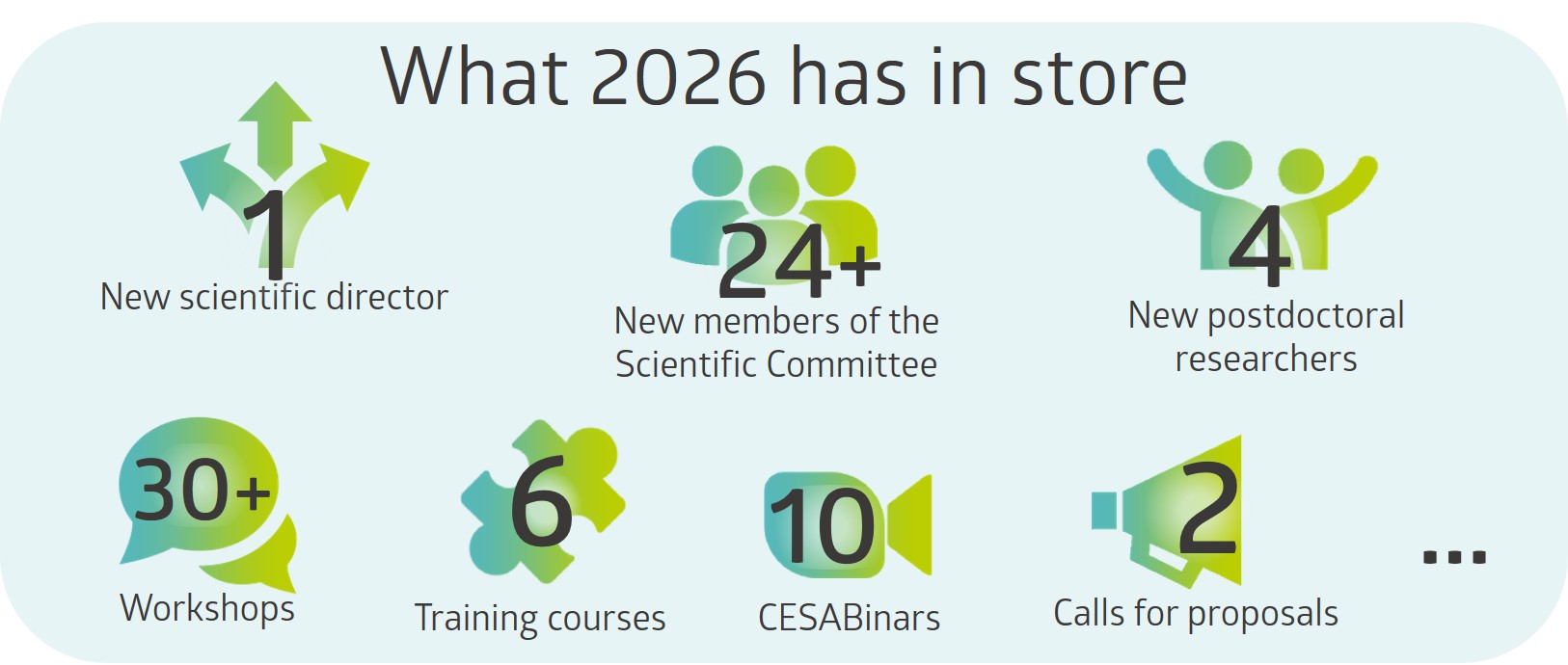
Research Director at INRAE, I am pleased and honored to join the FRB-CESAB centre as its Scientific Director, succeeding Nicolas Mouquet, whom I sincerely thank for all the work accomplished for the development of CESAB: you are handing over the keys to a centre with well-established operations and international recognition, and I will strive to live up to it.
Calls for projects, hosting international scientific working groups with dedicated postdoctoral researchers, synthesis publications, high-level training, seminars… Cesab indeed offers, thanks to a particularly committed team of managers, communication officers and data scientists, a unique working environment in France to advance international knowledge on biodiversity and contribute to halting its decline, notably by supporting public policies.
My motivation to take on these new responsibilities has been largely nourished by my experience as the coordinator of a Cesab project, with week-long collective and friendly working sessions that I found magically organized and exceptionally productive scientifically. Simply put, they are rare moments of pure research in our daily lives as researchers. As a member of the CESAB Scientific Committee (CS) for two terms, I was also able to witness the richness of the proposals and the scientific excellence co-led by French scientists from all fields of ecology. I would like to take this opportunity to warmly thank the outgoing SC for its commitment over the past four years. Now as Scientific Director of CESAB, I aim to enable the scientific community and project teams to reach the most ambitious and impactful scientific objectives. Supporting the postdoctoral researchers involved in CESAB projects in their daily work and scientific careers, in complement to the projects’ PIs, is another managerial responsibility that I particularly value. My dual experience in leading scientific syntheses for ministries and directing a research laboratory gives me the initial confidence to take on these new missions, even though the challenge appears very great! While working for Cesab half of my time, I continue my research activities in landscape agroecology at Dynafor in Toulouse.
Aude Vialatte – Scientific Director of the FRB-Cesab
>> Interview with Aude Vialatte
Life and updates from the groups
CESAB since September 2025
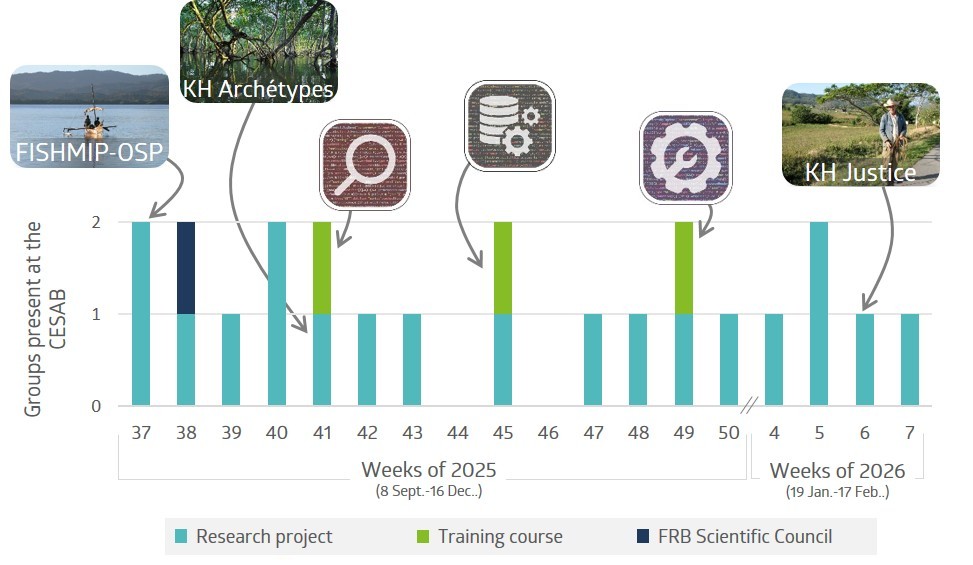
A host venue for research groups, visiting researchers and sometimes scientific meetings, CESAB is rarely empty.
Over nineteen weeks, at the turn of 2025 and 2026, nineteen groups followed one another there, including three hosted for the first time: FISHMIP-OSP (a project resulting from the 2024 generic call for projects) and the “Knowledge Hubs” ARCHETYPES and JUSTICE (projects from PC03 of the PEPR Nature-based Solutions).
This sustained activity was complemented by three training sessions and a meeting of the FRB Scientific Council. All were opportunities to meet, exchange ideas and foster new scientific collaborations.
This momentum at CESAB relies in particular on its scientific committee. Composed of around twenty researchers with diverse expertise covering a broad multidisciplinary field, the committee is currently undergoing renewal. As the call for applications has now closed (18 February), we will present the new composition of the committee in the next newsletter.
We would already like to extend our sincere thanks to the outgoing members of the scientific committee for their commitment over the years, the time dedicated to evaluating projects submitted to the calls, the reflection carried out on CESAB’s strategic directions, and their contribution to its visibility.
2025 Call – IDEASHARE & DATASHARE
As part of the FRB-CESAB 2025 call for projects with the support of the PNDB, three innovative projects on the synthesis of ideas and concepts and the analysis of existing data were selected:
- CROPTRAITS, Building a database on the functional traits of cultivated species, coordinated by Lucie MAHAUT (INRAE, France) and Samuel PIRONON (Queen Mary Univ. of London, UK).
- FUNDIVA, Towards a framework to quantify and explain the causes of changes in functional diversity, coordinated by Pol CAPDEVILA (Univ. de Barcelona, Spain) and Sandrine PAVOINE (MNHN, France).
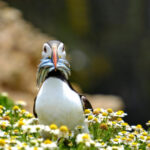
- SILK, Supporting the preservation of Indigenous and local knowledge in global biodiversity use data, coordinated by Giulia MATTALIA (Univ. de Barcelona, Spain) and Guillaume ODONNE (CNRS LEEISA, French Guiana).
2025 Call – France – Canada: 3rd joint call
The third CIEE – FRB-CESAB joint call, funded by the French Embassy in Canada, enabled Marie-Josée Fortin to come to CESAB to work with the FOOD-WEBS group. A recurring CIEE – FRB-CESAB call that has fostered meetings, synergies and productive exchanges!
“Through collaboration between the FRB-CESAB (France) and CIEE (Canada), and the French Embassy in Canada, I, Marie-Josée Fortin, was able to participate in the 5th workshop of the FOOD-WEBS working group. The co-organizers, participants, and staff were very welcoming. (…) Overall, it is an extremely well-run and productive working group that fostered scientific interactions and collaborations among all participants, advancing current knowledge of how isotopic data can help resolve food web structures and functions.”
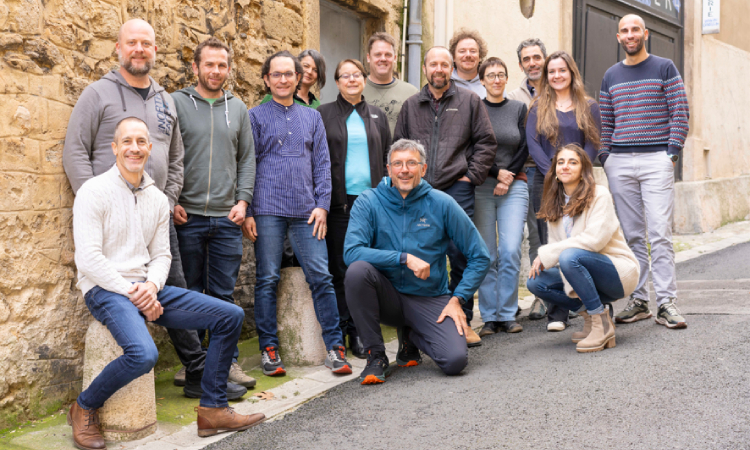
Marie-Josée Fortin and the FOOD-WEBS group during their 5th workshop in January 2026.
Calendar: Calls and events
[Upcoming call] Generic Call for Projects 2026
2026 marks the return of the FRB-CESAB generic call for projects! The aim of this call is to fund innovative projects that synthesize ideas and concepts and/or analyze existing data, in order to improve scientific knowledge related to biodiversity and help better protect it. Submitted projects may address any topic related to biodiversity, from the perspective of natural sciences and/or social sciences and humanities. Work on the relationship between biodiversity and the four other domains of the Nexus as defined by IPBES (human health, water, food and climate) is encouraged.
The call will open on 15 April 2026.
More information on the call page:
![[Call for proposals FRB-CESAB 2026]](https://www.fondationbiodiversite.fr/wp-content/uploads/2020/09/AAP_BLANC_2020_web.jpg)
[Past and upcoming webinars] CESABINARS
The CESABINARS, monthly online scientific meetings, continue in 2026. They provide a rare opportunity for direct exchange with project members and can also be (re)watched on YouTube. Find all the information and recordings of past CESABINARS — as well as information and the connection link for the next one:
![[FRB-CESAB] CESABINARs](https://www.fondationbiodiversite.fr/wp-content/uploads/2024/11/CESAB-Cesabinar-Webinar.jpg)
We can already announce the next three CESABINARS:
- On 26 March at 3 pm for NEFINEO, on fungal interaction networks in the Neotropical regions.
- On 23 April at 3 pm for FAUNASERVICES, on the relationships between soil macrofauna biodiversity and the provision of ecosystem services in the South American Neotropics.
- On 28 May at 3 pm for INTRACO, on “Untangling the role of intraspecific variability in the coexistence of tropical forest tree species”.
[Past event] Focus on the Blue and Green Justice conference
How can stakeholder engagement in conservation processes strengthen the protection and resilience of terrestrial and marine ecosystems? This is the question addressed by four FRB-CESAB research groups (BLUE JUSTICE, JUSTCONSERVATION, POWERBIODIV and PARSEC in collaboration with MPA-POVERTY), which shared their reflections during a conference held on 18 December 2025 in Paris. If the event interests you but you were unable to attend, don’t worry—we have you covered with this feature article that summarizes the presentations and discussions from the conference.

Training courses
The cycle of training courses continues! Pre-registrations for the next sessions will open between April and June for training on systematic reviews, data management and reproducible research.
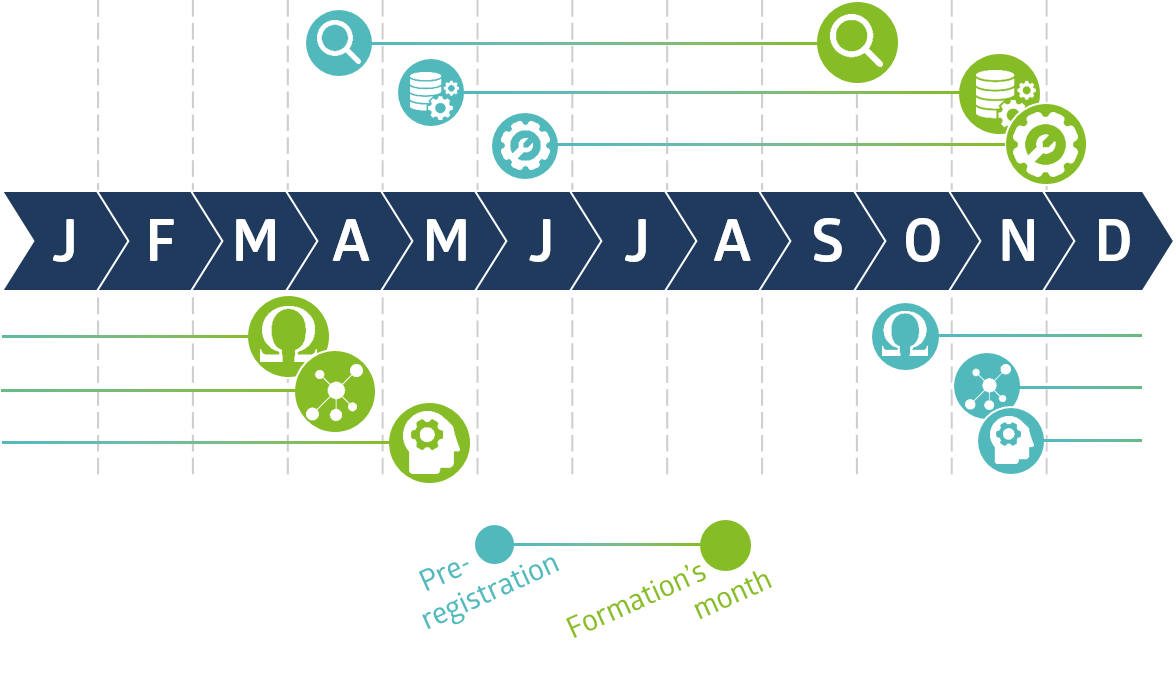
* The pictograms correspond to the training courses presented below
16–20 March 2026: Theory-driven Analysis of ecological data [Registration closed] / 5th edition

- In English
- Training in mathematical modelling techniques (differential equations, LOTKA-VOLTERRA, Jacobian matrices, etc.) as well as the statistical interface between models and biodiversity data
- In partnership with the GDR THEOMODIVE and with financial support from PEPR MATHS-VIVES
30 March – 3 April 2026: Analysing ecological network data [Registration closed] / 3rd edition

- In English
- Training in ecological network data analysis through a general introduction to networks, classical metrics (including modularity, nestedness and clustering), null models, generative models (SBM), multilayer networks, as well as an overview of newer techniques (such as embedding), combining traditional lectures with practical case studies.
- With financial support from ANR ECONET and PEPR MATHS-VIVES
1–5 June 2026: AI for Ecologists: a toolkit [Registration closed] / 2nd edition

- In English
- Training in artificial intelligence concepts and tools through a mix of theory and practical work. Using different types of data commonly encountered in ecology, the aim of the course is to provide participants with the autonomy needed to assess which algorithms are best suited to their research questions, where to obtain them and how to adjust them according to the problem addressed.
October 2026: Synthesizing knowledge on biodiversity: introduction to meta-analyses and systematic reviews [Pre-registration opens in April] / 5th edition
- In French
- Introduction to meta-analyses and systematic review/mapping methods applied to biodiversity
- In partnership with PATRINAT and UR HORTSYS (CIRAD)
November 2025: Biodiversity data: from data collection to publication [Pre-registration opens in May] / 3rd edition

- In French
- The biodiversity data lifecycle, from acquisition to openness, including standardization, archiving and the publication of a data paper and a data management plan
- In partnership with the National Biodiversity Data Hub (PNDB) and GBIF France
December 2025: Best practices for Reproducible Research in Computational Ecology [Pre-registration opens in June] / 8th edition

- In French
- Training researchers in reproducibility tools, software development and version management (R, GIT, QUARTO, RENV, DOCKER, etc.) applied to biodiversity research
- In partnership with GDR ECOSTAT, UMR ENTROPIE, ISEM, LBBE and MBB.
See the full list of training courses
Team updates
Nicolas Mouquet stepped down from his position at the end of 2025. His role has been taken over by Aude Vialatte – whom you may already have had the opportunity to get to know.
Beyond the scientific directorship, there has also been some movement among the postdoctoral researchers.
We therefore said goodbye to Clara Marino, postdoctoral researcher in the RIVAGE group, to whom we wish all the best for her future endeavors.
On the arrivals side, we were pleased to welcome:
- Stanislas Rigal, postdoctoral researcher on the BEYONDS project, in November 2025.
- Karina Montero, postdoctoral researcher on the KH EVOLUTION project, with us since early February.
And, outside the Montpellier offices, we would also like to welcome Lisa Darmet, postdoctoral researcher on the KH JUSTICE project, recruited in January by INRAE within the DYNAFOR unit in Toulouse.
Cassie Speakman's portrait
Having arrived from Australia in early 2024 for a postdoctoral position at CESAB, Cassie tells us about her research carried out within the DISCAR group, which explores the impacts of human activities on small carnivores. She also discusses her work between two Montpellier laboratories (CESAB and CEFE), her experience of doing a postdoc in France, and the adventure of moving to the other side of the world with her family.

- Hello Cassie, could you tell us about your research within the DISCAR group?
Our project aims to understand and predict the impacts of human activity on small carnivores. This work stems from the need to understand how ecological populations respond to changes in their environment in order to effective conserve biodiversity and ecosystem services. With most ecological populations exposed to multiple concurrent threats (e.g. habitat loss, pesticide use, etc.), predicting population-level responses can be challenging. We use small carnivores as a study system to exemplify analytical approaches and conceptual advances for understanding the population consequences of human activity, while also providing information for the management of small carnivores in France.
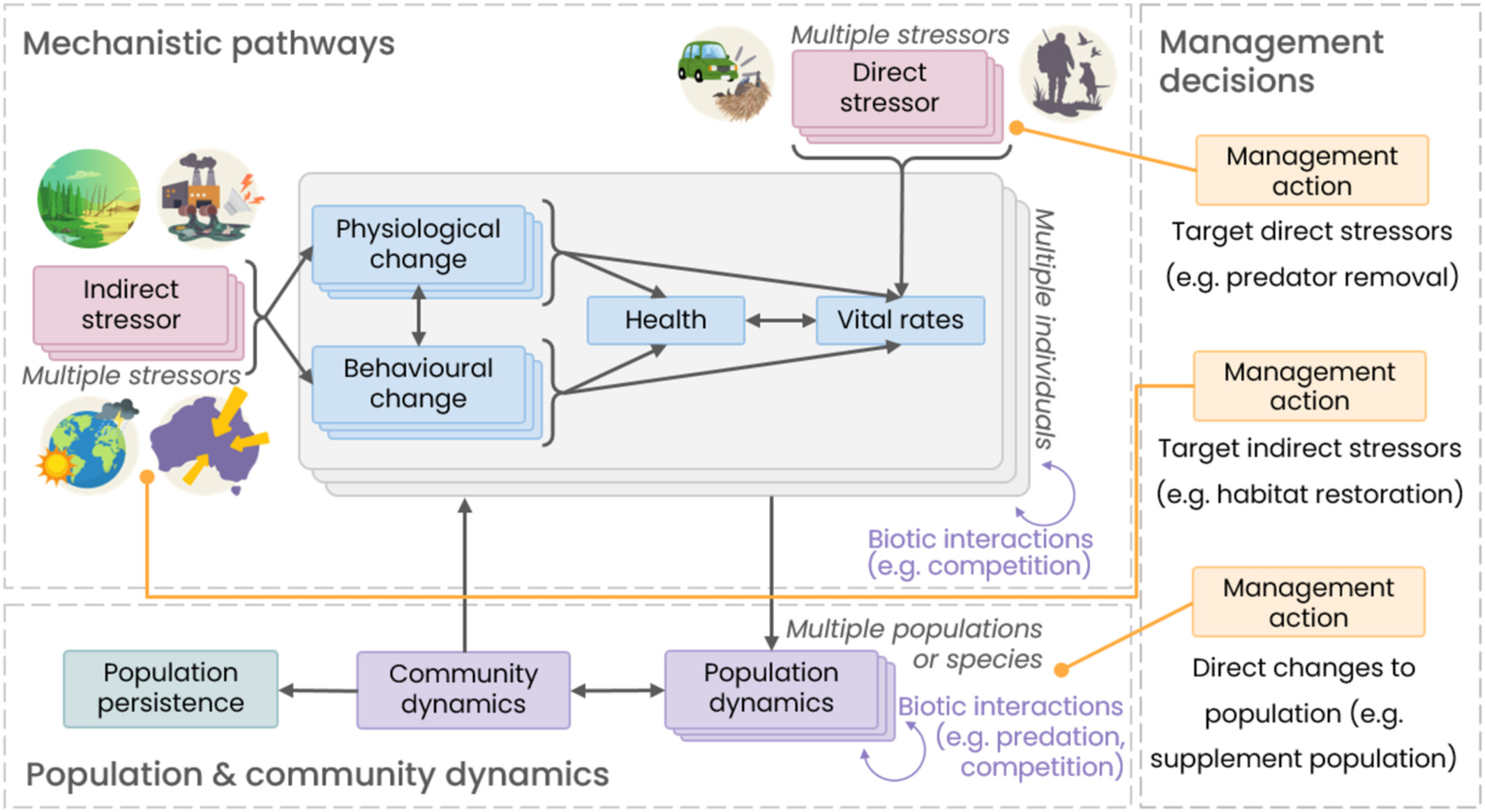
In recent publications(1,2), our working group provided guidance on how to predict population-level responses to disturbance, including information on the ecological processes, modelling approaches, and model integrations that researchers and practitioners can consider using. We have also applied various modelling approaches to case-studies, including for pine and stone marten(2), Eurasian otters(3), and Eurasian lynx(4). We have a lot on the go right now ahead of our fourth workshop – so stay tuned for more!
Sources
- (1) Speakman, C. N., Bull, S., Cubaynes, S., Davis, K. J., Devillard, S., Fryxell, J. M., Gallagher, C. A., McHuron, E. A., Rastello, K., Smallegange, I. M., Salguero-Gómez, R., Bonnaud, E., Duchamp, C., Giraudoux, P., Lacombe, S., Marneweck, C. J., Schroll, L., Tableau, A., Ruette, S., & Gimenez, O. (2025). Understanding and Predicting Population Response to Anthropogenic Disturbance : Current Approaches and Novel Opportunities. Ecology Letters, 28(8), e70198. https://doi.org/10.1111/ele.70198
- (2) Speakman, C. N., Gimenez, O., Schumaker, N. H., Watkins, S. M., Vandel, J.-M., Mathevet, M., Ruette, S., & Devillard, S. (2025). Accounting for spatial heterogeneity in trapping pressure and its impact on population dynamics of sympatric pine and stone martens. Landscape Ecology, 41(2), 22. https://doi.org/10.1007/s10980-025-02282-y
- (3) Lacombe, S., Devillard, S., Kauffmann, C., Aznar, M., Dupuis, O., Fournier-Chambrillon, C., Isère-Laoué, E., Fraissard, C., Fuento, N., Heugas, T., Martin, A., Perrin, M., Roche, A., Ruys, T., Simonnet, F., Thomas, B., Souriau-Villeger, A., & Gimenez, O. (2025). Range expansion and reconnection of historical populations in the Eurasian otter (Lutra lutra) in France : Insights from heterogeneous data and integrated species distribution modelling. Biological Conservation, 307, 111179. https://doi.org/10.1016/j.biocon.2025.111179
- (4) Bauduin, S., Germain, E., Zimmermann, F., Idelberger, S., Herdtfelder, M., Heurich, M., Kramer-Schadt, S., Duchamp, C., Drouet-Hoguet, N., Morand, A., Blanc, L., Charbonnel, A., & Gimenez, O. (2025). Modelling Eurasian lynx populations in Western Europe : What prospects for the next 50 years? Peer Community Journal, 5. https://doi.org/10.24072/pcjournal.543
- Your postdoc has brought you to Montpellier, where you work both at CESAB, the synthesis centre of FRB, and periodically at CEFE, a CNRS research centre where one of the project leaders of DISCAR is based. How does your work unfold between these two environments, and how does having these two scientific bases in Montpellier enrich your research?
For the most part I am based at the CESAB. CESAB has a more close-knit feel and great access to the CESAB groups, which can be a great way to extend research networks. But I have access to a larger research group at the CEFE, so there are a lot of opportunities to attend meetings, seminars, and other events. This combination is highly beneficial for networking as well as developing friendships with a diverse group of people.
- More generally, how would you describe the experience of doing a postdoc in France? What do you see as the main strengths and challenges, and what advice would you give to other international early-career researchers considering this path?
It has been a really interesting experience that I’ll certainly remember for a lifetime. I moved here with my young family, which certainly had its challenges!
The research culture in France is quite different from Australia, with a lot more focus on work-life balance. This was super refreshing to see. There’s a whole other ecosystem of research, with different grant opportunities and a fairly intricate process to land a permanent position. Knowing that I didn’t want to stay in France long-term, I didn’t need to think too much about this but I definitely appreciate that there are a lot more research-only avenues in France.
The main challenge was around French administration. Thankfully people are always willing to help navigate this. We also chose to have our son in a French public school rather than international school. He has really thrived in this diverse environment. Moving internationally, especially across the other side of the globe, is not easy but it is well worth it!
It's published!
Articles from CESAB groups highlighted on the FRB website and social media
Your research is also featured online!
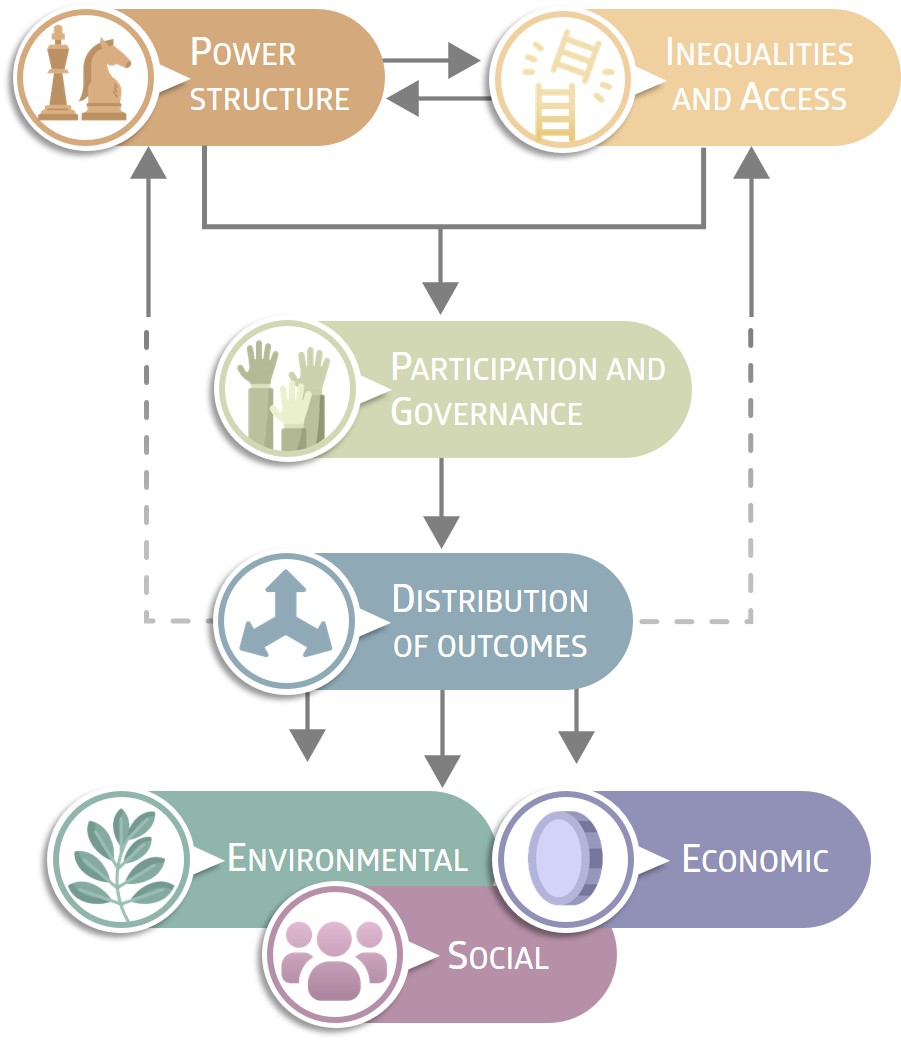
- Social justice and equity are not merely moral imperatives, but essential conditions for ecological success. They determine local acceptance, effectiveness, and the long-term impact of projects. Beyond this observation, scientists propose concrete tools to assess the integration of social justice into projects, as well as guidelines for implementing it. The challenge now is to put these into practice. Read the summary “red thread” of the conference on green and blue justice, which brought together the results of the JustConservation, Blue Justice, PowerBiodiv and Parsec groups in collaboration with MPA-Poverty.
- Among the tools discussed in the summary: the Ocean Equity Index (OEI), developed by the Blue Justice group. The first global tool designed to measure, compare and promote equity in ocean-related initiatives, projects and policies, the Ocean Equity Index transforms a notion that is often abstract into a measurable and actionable standard.
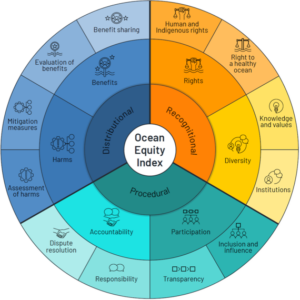
Read the press release on the OEI
- Also among the tools discussed in the summary: the PowerBiodiv group has published two complementary resources for practitioners, researchers and facilitators to better understand and integrate power dynamics in participatory processes related to biodiversity: an illustrated interactive handbook and a booklet of narratives.
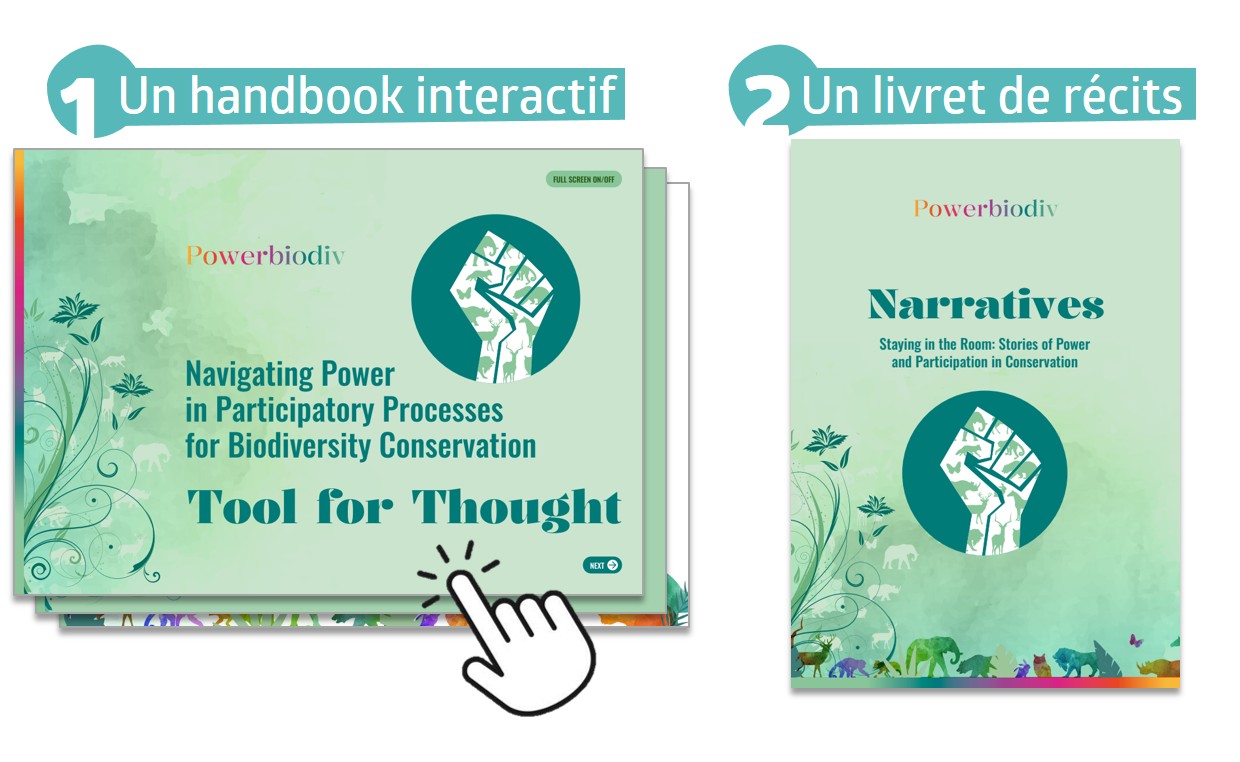
Access the interactive handbook Access the narrative booklet
Tips and advice via the CESAB GitHub blog
CESAB has its own GitHub website, maintained by Nicolas Casajus, a genuine resource site where you can find training materials, R packages developed by the groups, published databases… as well as tips and advice!
In recent months, two new entries written by CESAB postdoctoral researchers have been posted:

Scientific articles published since the last newsletter
[AGRI-TE]
- Bonfanti J, Langridge J, Avadí A, Casajus N, Chaudhary A, Damour G, Estrada‐Carmona N, Jones SK, Makowski D, Mitchell M, Seppelt R & Beillouin D (2025) Geographic, taxonomic and metric gaps in biodiversity research limit evidence‐based conservation in agricultural landscapes: An umbrella review. Ecology Letters, 28, e70220. DOI: 10.1111/ele.70220.
[DISCAR]
- Speakman CN, Gimenez O, Schumaker NH, Watkins SM, Vandel J-M, Mathevet M, Ruette S & Devillard S (2026) Accounting for spatial heterogeneity in trapping pressure and its impact on population dynamics of sympatric pine and stone martens. Landscape Ecology, accepted. DOI: 10.1007/s10980-025-02282-y.
[DIVERS]
- Helmstetter AJ, Ezedin Z, De Lírio EJ, De Oliveira SM, Chatrou LW, Erkens RHJ, Larridon I, Leempoel K, Maurin O, Roy S, Zuntini AR, Baker WJ, Couvreur TLP, Forest F & Sauquet H (2025) Toward a phylogenomic classification of magnoliids. American Journal of Botany, 112, e16451. DOI: 10.1002/ajb2.16451.
[FAIRWOOD]
- Wang W, Qin L, Zhang T, Yang F, Cabon A, Wang Z, Zhou P, Zhang Y, Fonti P & Huang J (2025) Seasonal climate variations drive decoupling between the duration and amount of xylem growth along a hydrothermal gradient in the Southern Altai Mountains. Journal of Ecology, 113, 1793-1806. DOI: 10.1111/1365-2745.70066.
- Zhang Y, Huang J-G, Wang M, Wang W, Yang F, Deslauriers A, Fonti P, Liang E, Mäkinen H, Oberhuber W, Rathgeber CBK, Tognetti R, Treml V, Yang B, Zhai L, Antonucci S, Buttò V, Camarero JJ, Campelo F, Čufar K, Luis MD, Fajstavr M, Giovannelli A, Gričar J, Gruber A, Gryc V, Güney A, Jyske T, Kašpar J, King G, Krause C, Lemay A, Lombardi F, Castillo EMD, Morin H, Nabais C, Nöjd P, Peters RL, Prislan P, Saracino A, Shishov VV, Vavrčík H, Vieira J, Zeng Q & Rossi S (2025) Soil nitrogen drives inverse acclimation of xylem growth cessation to rising temperature in Northern Hemisphere conifers. Proceedings of the National Academy of Sciences, 122, e2421834122. DOI: 10.1073/pnas.2421834122.
- Goulpeau A, Hedde M, Ganault P, Lapied E, Maggia M-E, Marcon E & Decaëns T (2025) Dissecting earthworm diversity in tropical rainforests. Ecography, 2025, e07697. DOI: 10.1111/ecog.07697.
- Boulêtreau S, Vagnon C, Comte L, Sagouis A, Pool T, Stiling RR, Harrod C, South J, McIntosh AR, Perga M-E, Sánchez-Hernández J, Roussel J-M, Tunney TD, Jackson M, Olden JD & Cucherousset J (2025) IsoFresh: A global stable isotope database of freshwater food webs. Knowledge & Management of Aquatic Ecosystems, 15. DOI: 10.1051/kmae/2025010.
- Olden JD, Keppeler FW, Jardine TD, Boulêtreau S, Harrod C, Jackson MC, McIntosh AR, Perga M, South J, Tedesco P, Vagnon C & Cucherousset J (2025) Looks can be deceiving: Morphological traits are weakly associated with the isotopic niches of freshwater fishes. Global Ecology and Biogeography, 34, e70124. DOI: 10.1111/geb.70124.
- Perga M, Bouletreau S, Cucherousset J, Harrod C, McIntosh A, Olden JD, Vagnon C & Jardine T (2025) A global estimator of C and N isotope baselines for fresh waters. Methods in Ecology and Evolution, accepted. DOI: 10.1111/2041-210x.70225.
[FORCIS]
- Casajus N, Chaabane S, Giraud X, de Garidel-Thoron T & Greco M (2025) forcis: An R package for accessing, handling and analysing the FORCIS database. Journal of Open Source Software, 10, 9217. DOI: 10.21105/joss.09217.
- Ziveri P, Langer G, Chaabane S, De Vries J, Gray WR, Keul N, Hatton IA, Manno C, Norris R, Pallacks S, Young JR, Schiebel R, Zarkogiannis S, Anglada-Ortiz G, Bianco S, de Garidel-Thoron T, Grelaud M, Lucas A, Probert I & Mortyn PG (2025) Calcifying plankton: From biomineralization to global change. Science, 390, eadq8520. DOI: 10.1126/science.adq8520.
[FREE 2]
- Mouquet N, Mahaut L, Thuiller W, Auber A, Casajus N, Enquist BJ, Gaüzère P, Loiseau N, Mouillot D, Munoz F, Villéger S & Violle C (2025) Spatial insurance of distinct ecological functions. Ecology Letters, 28, e70266. DOI: 10.1111/ele.70266.
[IMPACTS]
- Gaüzère P, Violle C, Schrodt F, Grenié M, Santini L, Hedde M, Porcher E, Goury R, Beck M & Thuiller W (2025) Bridging macroecology and temporal dynamics to better attribute global change impacts on biodiversity. Global Ecology and Biogeography, 34, e70086. DOI: 10.1111/geb.70086.
- Goury R, Thuiller W, Abdulhak S, Pache G, Van Es J, Bowler DE, Renaud J, Violle C & Münkemüller T (2025) Recent vegetation shifts in the French Alps with winners outnumbering losers. Journal of Ecology, 113, 3275-3292. DOI: 10.1111/1365-2745.70159.
- Schrodt F, Beck M, Estopinan J, Bowler DE, Fontaine C, Gaüzère P, Goury R, Grenié M, Martins IS, Morueta‐Holme N, Santini L, Hedde M, Martin G, Porcher E, Si‐Moussi S, Tzivanopoulos M, Vernham G, Violle C & Thuiller W (2025) Advancing causal inference in ecology: Pathways for biodiversity change detection and attribution. Methods in Ecology and Evolution, accepted. DOI: 10.1111/2041-210X.70131.
[LandWorm]
- Hoeffner K, Bergerot B, Butt KR, Gérard S, Pelosi C, Pérès G, Briones MJ, Decaëns T, Delaveau N, Guillocheau S, Hedde M, Hotte H, Le Bayon R-C, Muys B, Phillips HR, Poupelin M & Cluzeau D (2025) Reliability of earthworm data from citizen science: Lessons from 7 years of a French national monitoring protocol. Applied Soil Ecology, 214, 106329. DOI: 10.1016/j.apsoil.2025.106329.
- Phillips HRP, Hoeffner K, Muys B, Le Bayon R-C, Cluzeau D, Butt KR, Maréchal J, Briones MJI, Decaëns T, Hedde M, Gérard S, Pérès G, Petit-Dit-Grézériat L & Pelosi C (2025) Urban earthworm communities driven more by climate and elevation than urbanisation intensity. Urban Ecosystems, 28, 210. DOI: 10.1007/s11252-025-01826-z.
[PPR Océan]
- Murphy K, Fierro‐Arcos D, Rohr T, Green D, Novaglio C, Baker K, Ortega‐Cisneros K, Eddy TD, Harrison CS, Hill SL, Eskuche‐Keith P, Cataldo‐Mendez C, Petrik CM, Pinkerton M, Spence P, Stollberg I, Subramaniam RC, Trebilco R, Tulloch V, Palacios‐Abrantes J, Bestley S, Bianchi D, Boyd P, Buchanan PJ, Bryndum‐Buchholz A, Coll M, Corney S, Datta S, Everett JD, Forestier R, Fulton EA, Guibourd De Luzinais V, Heneghan R, Mason JG, Maury O, McMahon CR, Murphy E, Richardson AJ, Tittensor DP, Spillias S, Steenbeek J, Veytia D & Blanchard J (2025) Developing a southern ocean marine ecosystem model ensemble to assess climate risks and uncertainties. Earth’s Future, 13, e2024EF004849. DOI: 10.1029/2024EF004849.
- Sylvester ZT, Veytia D, Bahl AA, Bahlburg D, Benkort D, Bestley S, Cagdas B, Cleary AC, Constable A, Corney S, Fach BA, Hellessey N, Hill SL, Johnston NM, Labrousse S, Merkel B, Murphy EJ, Subramaniam RC, Thorpe S & Raymond B (2025) Untangling the complexities of larval Antarctic krill overwintering success under climate change. ICES Journal of Marine Science, 82, fsaf049. DOI: 10.1093/icesjms/fsaf049.
- Veytia D, Mariani G, Martí Barclay V, Airoldi L, Claudet J, Cooley S, Magnan A, Neill S, Sumaila UR, Thébaud O, Voolstra CR, Williamson P, Bonnin M, Langridge J, Comte A, Viard F, Shin Y-J, Bopp L & Gattuso J-P (2025) A machine learning-based evidence map of ocean-related options for climate change mitigation and adaptation. npj Ocean Sustainability, 4, 60. DOI: 10.1038/s44183-025-00159-w.
- Veytia D, Bopp L, Barclay VM, Neill S, Bonnin M, Carranza DM, Claudet J, Comte A, Mariani G, Shin Y-S, Thébaud O, Voolstra CR, Viard F & Gattuso JP (2025). From publication to action: Connecting science, policy, and public attention for ocean-related climate mitigation. In Review. DOI: 10.21203/rs.3.rs-8114358/v1.
- Bordin KM, Bauman D, Pugh TAM, Müller SC, Phillips OL, Fortunel C, Needham JF, Woodall CW, Astigarraga J, Schietti J, Liu D, Bialic‐Murphy L & Esquivel‐Muelbert A (2025) Growth–survival trade‐off in temperate trees is weak and restricted to late‐successional stages. Journal of Ecology, 113, 3466-3477. DOI: 10.1111/1365-2745.70175.
- Esquivel-Muelbert A, Banbury Morgan R, Brienen R, Gloor E, Lewis SL, Dexter KG, Almeida E, Almeida De Oliveira E, Álvarez-Dávila E, Alves De Oliveira A, Andrade A, Vieira SA, Aragão L, Araujo-Murakami A, Arets E, Arroyo L, Aymard-Corredor G, Banki O, De Camargo PB, Barroso J, Blanc L, Brown F, Camargo JL, Castro W, Chama Moscoso V, Chave J, Chavez E, Comiskey J, Da Costa ACL, Del Aguila Pasquel J, Derroire G, Di Fiore A, Fauset S, Feldpausch TR, Flores Llampazo G, Guillen Villaroel R, Herrera R, Higuchi N, Honorio Coronado E, Huamantupa-Chuquimaco I, Huaraca Huasco W, Jimenez E, Killeen T, Laurance S, Laurance W, Levesley A, Lopez-Gonzalez G, Malhi Y, Marimon B, Marimon Junior BH, Matias De Almeida Reis S, Mendoza Bautista C, Polo IM, Monteagudo-Mendoza A, Morandi PS, Nogueira Lima A, Núñez Vargas P, Pallqui Camacho N, Parada Gutierrez A, Peacock J, Peñuela-Mora MC, Pickavance G, Pipoly J, Pitman N, Prieto A, Quesada C, Ramirez Arevalo F, Réjou-Méchain M, Restrepo Correa Z, Rojas R, Rodriguez Bayona L, Roopsind A, Salomão R, Silva N, Silva Espejo J, Silveira M, Stropp J, Talbot J, Ter Steege H, Terborgh J, Thomas R, Gamarra LV, Van Der Hout P, Vasquez Martinez R, Guimarães Vieira IC, Vilanova E, Zagt R, Baker TR & Phillips OL (2025) Increasing tree size across Amazonia. Nature Plants, 11, 2016-2025. DOI: 10.1038/s41477-025-02097-4.
- Gora EM, McGregor IR, Muller‐Landau HC, Burchfield JC, Cushman KC, Rubio VE, Mori GB, Sullivan MJP, Chmielewski MW & Esquivel‐Muelbert A (2025) Storms are an important driver of change in tropical forests. Ecology Letters, 28, e70157. DOI: 10.1111/ele.70157.
[Unicop]
- Duthie AB & Luque VJ (2025) Foundations of ecological and evolutionary change. Ecology and Evolution, 15, e72454. DOI: 10.1002/ece3.72454.
[Membres Cesab]
- Alisa CAG, Razak TB, Mouquet N, Graham NAJ, Hemingson CR, Mouillot D, Mars Coral Restoration Project monitoring Team, Subhan B, Zamani NP, Vida RT & Lamont TAC (2025) Benthic communities on restored coral reefs confer equivalent aesthetic value to healthy reefs. Scientific Reports, 15, 20790. DOI: 10.1038/s41598-025-06373-3.
- Beck M, Annasawmy P, Birre D, Busana M, Casajus N, Coux C, Marino C, Mouquet N, Nicvert L, Oliveira BF, Petit-Cailleux C, Tortosa A, Unkule M, Vagnon C & Veytia D (2025) Strategic citations for a fairer academic landscape. bioRxiv, 2025-08. DOI: 10.1101/2025.08.06.668908
- Marino C, Soares FC & Bellard C (2025) Conservation priorities for functionally unique and specialized terrestrial vertebrates threatened by biological invasions. Conservation Biology, 39, e14401. DOI: 10.1111/cobi.14401.
- Nicvert L, Fritz H & Dray S (2025) Trait matching without traits: Using correspondence analysis to investigate the latent structure of interaction networks. Peer Community Journal, 5, e73. DOI: 10.24072/pcjournal.580.
- Vagnon C, Chevalier M, Boulêtreau S, Bruel R, Guillon S, Holtgrieve G, Jackson M, Olden JD, Marin V, Millot A, Thebault E, Tedesco PA & Cucherousset J (2025) Experimental evidence for the desynchronization of ecosystem dynamics by global change. Ecology Letters, 28, e70271. DOI: 10.1111/ele.70271.