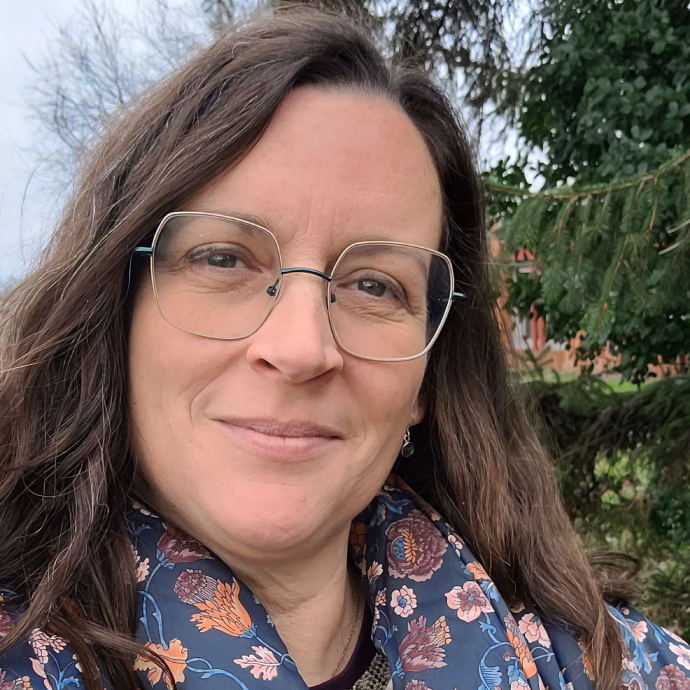
Interview with Aude Vialatte: New Scientific Director of the CESAB of the FRB

  • Hello Aude, congratulations on your appointment as Scientific Director of the CESAB and welcome to the adventure! Could you please introduce your background and your field of scientific expertise in a few words?


I am delighted to be joining the CESAB, which offers truly ideal scientific working conditions for researchers!

I have been a Research Director at INRAE for a few years now, after spending 11 years as a lecturer-researcher at ENSAT (which later became AgroToulouse). My research focuses on agroecology, biodiversity, and collective action at the landscape scale. I take part in interdisciplinary projects combining ecology and social geography. I use semi-experimental and observational approaches, as well as spatially explicit modelling, to develop knowledge and tools that support changes in practices.

For example, I recently led a collective scientific assessment for government ministries on crop protection through plant diversification over a four-year period. Mobilising both fundamental theoretical knowledge and context-specific knowledge, this was an intense experience of interdisciplinary scientific synthesis within a group of 30 scientists, accompanied by rich and varied communication and dissemination activities.


I am currently completing my term as Unit Director of DYNAFOR, after eight years in its leadership as Deputy Director and then DU.

Working on the scientific strategy of an interdisciplinary research-action laboratory is both stimulating and enriching, with its management challenges and the responsibility of supporting colleagues and the collective.


  • How did you come to know the FRB and its CESAB, and what motivated you to join us?


I know the CESAB, the FRB’s synthesis centre, in two ways. First, as a member of its Scientific Committee, with responsibilities that include advising on scientific strategy, organising calls for projects, selecting projects, and mentoring postdoctoral researchers.

Second, for the past year, as a member of a project hosted at the CESAB, with the unique experience of working under optimal conditions during one-week residencies with a group of colleagues on a scientific topic. It feels so good to experience these 100% scientific and convivial moments! This made me want to contribute to the long-term sustainability of the centre, all the more so given the biodiversity-related challenges.


  • What would you like to develop during this term alongside us?


The CESAB is well structured and has an organisation that works well thanks to a committed, motivated, and motivating team!

The centre is well recognised within the scientific community in ecology. I mainly wish to develop the scientific themes of the nexus, as developed by IPBES and adopted by the FRB, which appear relevant for advancing ecological knowledge and strengthening the consideration of biodiversity-related issues, particularly to inform public policies. The challenge of diversifying financial resources in line with this thematic development is therefore an important one. Coordination with new research schemes, such as the PEPR, is also a current need associated with this mandate, as well as a genuine opportunity in the research landscape.

[FRB-CESAB] Newsletter 13 CESAB – September 2025

 few words from Hélène Soubelet, FRB’s Executive Director


FRB-Helene-Soubelet-2023


Thinking about sustainability through the Nexus lens — a new challenge for CESAB 2026

The year 2025 ends with a strong record for the FRB and its CESAB. With the help and under the leadership of its scientific director, Nicolas Mouquet, we successfully achieved the goal of revitalizing the synthesis center by relocating it from Aix-en-Provence to Montpellier, while maintaining an annual call for projects. 2025 was no exception, with the Datashare call, which was expanded this year to include a new type of project, Ideashare. This program supports projects that focus on creating new concepts, models, and methods through interdisciplinary collaboration, bringing together biodiversity experts and specialists from other fields to explore new perspectives and frameworks for thinking. 2025 also saw the launch of a new training course on artificial intelligence for ecologists, which was highly successful. Finally, the workshop meetings of the research program “impacts of human activities on terrestrial biodiversity in the Anthropocene” brought together researchers and stakeholders to reflect on transdisciplinarity and the transfer of scientific knowledge to public and private actors.


The year 2025 marks a period of many changes for the CESAB, both within its Scientific Council and its scientific leadership. After six years in this position, Nicolas Mouquet, whom we thank for his dedication, will hand over the role to Aude Vialatte in 2026. This appointment opens a new chapter for the FRB. A research director at INRAE and head of the Dynafor unit, Aude brings a strong interest in the synthesis between ecology, agriculture, and society. In the years to come, the FRB aims to position CESAB’s work within an evolving biodiversity science landscape, guided by international frameworks and IPBES assessments. One of the key challenges will be to align CESAB’s missions with these frameworks by encouraging projects that simultaneously integrate biodiversity, food, water, health, and climate, while maintaining the center’s analytical excellence and its hallmark interdisciplinarity. Breaking down research silos, strengthening interactions between natural and social sciences, developing data interoperability and open science, and promoting the co-production of knowledge are the core missions of the FRB. CESAB is a leading platform for the analysis and valorization of research data. As such, it contributes to this dynamic, combining scientific excellence with the political relevance of ecological research across all areas of society.


More information about the Cesab


[FRB-CESAB] Newsletter 6 CESAB – January 2022

A WORD FROM BRUNO FADY, PRESIDENT OF CESAB’S SCIENTIFIC COMMITTEE


It is worth recalling that CESAB is an infrastructure of the FRB, a unique and original tool in the French research landscape. It is one of the rare scientific tools that have been created in the world over the last 30 years, based on the observation that the data generated, and collected during short-term projects, that classically finance research in ecology and biodiversity, are not very well used (Baron et al., 2017). We can only welcome this decision, given the scientific production of the working groups funded with the CESAB, the career path of the young scientists who have been part of and are often the core of these working groups, and the recognition of the work published by many private and institutional actors to improve biodiversity protection (see “CESAB in a Zoom in 2021”). 


The Covid-19 pandemic pointed out that scientific advances are not the work of an isolated individual, of an (unrecognized) genius who emerges in the midst of a crisis, but rather the work of collectives, manipulating and analyzing data that must be compiled and verified, re-testing and re-verifying hypotheses and concepts. A scientific fact only really becomes so when it finally emerges as an evidence, a consensus (in the statistical sense of the term) for the whole scientific community. At a time when the scientific approach and its results are being questioned by part of society, and beyond a relevant (re)development of data, concepts and their analysis for its scientific discipline, the role of CESAB is to disseminate scientific facts to better understand and protect biodiversity. 


After two mandates as president of the CESAB scientific committee, it is time for me to hand over. I would have gladly extended my mandate for a longer period of time as the dynamism of CESAB is so strong, reminding me a little of the enthusiastic state of mind that reigned when it was created more than 10 years ago. But, fortunately, our statutes do not allow it and a new scientific committee will be created in 2022. 


The CESAB is now a French institution, widely recognized. Scientists working in the field of ecology and biodiversity are not mistaken, they apply each year in greater numbers to the FRB-CESAB calls for proposals. I hope that the founding members of the FRB, the French public authorities and biodiversity stakeholders will continue to actively support the CESAB, financing at least several working groups per year and the structure itself. With France’s reaffirmed commitments to biodiversity protection at the World Conservation Congress in Marseille in September 2021, I have no doubt that this will be the case. 


Happy New Year to all, welcome to the new scientific committee and long live the CESAB.  

Bruno Fady


More information about CESAB


[FRB-CESAB] Newsletter 4 CESAB – January 2021

A WORD FROM THE NEW FRB’S PRESIDENT: DENIS COUVET


FRB-Denis-Couvet-HD

Denis Couvet

The French Foundation for Biodiversity Research’s ambition is to better understand the dynamics of biodiversity, in interaction with those of societies. Its vocation is to build, with all actors, public and private, civil society, approaches based on nature and therefore biodiversity. Another main concern is to know how to anticipate the impacts, opportunities and unexpected effects… of these approaches, in an integrative and systemic framework. The synthesis center created by the FRB, CESAB, is a tool of excellence to meet these different objectives.

 
By bringing together the best international scientific teams around scientific synthesis, combining data, models and concepts, the work of CESAB should enable us to better understand the functioning of biodiversity, its state and its dynamics, from local to global scales. By shedding some light on the organization of ecological systems and socio-ecosystems, CESAB should help us address the complexity of these systems and the conditions of their resilience.
 
For the coming year, I hope that the FRB’s team, which I have had the honor of chairing since January 1, and the scientific community will be able to work collectively on ambitious developments and exciting actions. 
 
Denis Couvet,
President of the French Foundation for Biodiversity Research
 
The FRB-CESAB team’s would like to collectively thank Jean-François Silvain, president of the FRB for the last 7 years. His contribution to the CESAB was invaluable and we will miss his insight and guidance. 


More information about CESAB


The CESAB is still active!

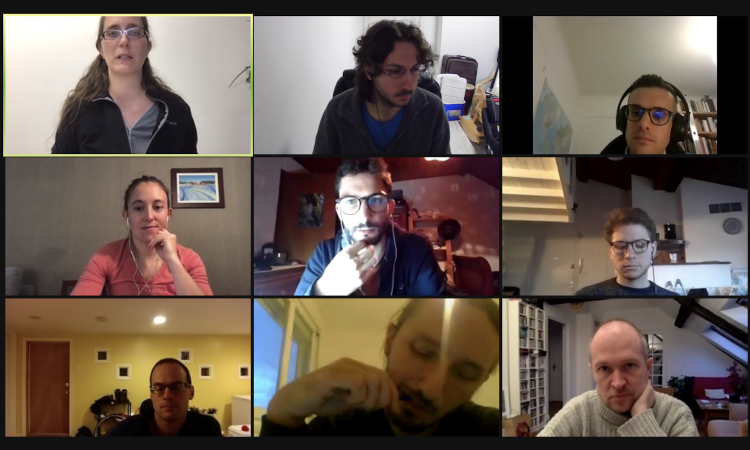
Despite the health situation, which does not allow researchers to meet at the CESAB in Montpellier, the groups remain active and work remotely. This is the case this week for the participants of the projects FREE and RED-BIO. 


FREE – about functional rarity 


FREE began in 2018 and works on functional rarity: how to define this rarity, how to quantify it and how to identify its causes and consequences. FREE ‘s participants have recently published, in collaboration with researchers from different institutes, an article based on data collected within the project and in which they show that ecologically rare species of birds and terrestrial mammals are also the most threatened (see the press release “Double jeopardy for ecologically rare birds and terrestrial mammals“).

Led by Cyrille Violle (CNRS) and Caroline Tucker (University of Colorado, USA), the group met (online!) this week to catch up on the various work in progress within the project.


RED-BIO –  about spatial ecology and ecological networks 


RED-BIO started this year and the participants have not yet had the opportunity to hold their first meeting at the CESAB in Montpellier. However, they were able to organize their first virtual meeting with the support of the FRB’s CESAB team and the Canadian Institute for Ecology and Evolution (CIEE). This is an opportunity for the participants to discuss the project’s progress and its main research question: under which conditions, the interactions between biological communities and the environment could generate spatial heterogeneity in abiotic resources?

The participants cover a wide geographical range from Vancouver, Canada, to Montpellier, France, and this first meeting allowed to clearly see the diversity of ideas within the group, but above all to detect elements of convergence. This project was selected from the joint call SYNERGY in collaboration with the CIEE and is led by Isabelle Gounand (CNRS) and Eric Harvey (Université de Montréal).


Red-Bio_W1
First meeting of the Red-Bio group


These meetings allow the FRB-CESAB’s groups to continue working on their projects and several scientific articles have been published in the last few months, some of them in high impact journals as Nature Communication, Global Change Biology,… see all the articles here. CESAB’s main objective is to advance knowledge in order to improve our understanding of ecosystems and their biodiversity and thus ensure their effective management and conservation.

[Call for proposal FRB-CESAB] The call for proposals is now open!

Through its Center for Biodiversity Synthesis and Analysis (CESAB), the French Foundation for Biodiversity Research opens a call for research projects, to fund at least three innovative projects relating to the synthesis of ideas and concepts and/or the analysis of existing data. The main aim of these projects should be to improve scientific knowledge of biodiversity and demonstrate how we can use this knowledge to better protect it. The submitted projects can deal with any topic related to biodiversity, in the fields of natural sciences or human and social sciences.


The selected projects will be funded for a period of three years, including: the recruitment of a post-doctoral student for two years, the organization of six meetings of the working group at CESAB and the promotion and publication of the results. The CESAB will also provide logistical, technical and administrative support.


  • Pre-proposal deadline: 1st December, 18:00 CET


More information

[FRB-CESAB] Newsletter 3 CESAB – July 2020

A WORD FROM THE CESAB SCIENTIFIC DIRECTOR


FRB Cesab Nicolas MouquetNicolas Mouquet


We have all been affected by the Covid-19 pandemic. Even if it is too early to decipher the conditions that triggered the emergence of the coronavirus, it is, as other major epidemics, related to the environmental and biodiversity crisis we are experiencing.


Prevention could have been possible but they waited for the crisis to appear before acting. Prevention should be at the basis of our collective behavior, prevention and not fear! Prevention requires that we take the time to understand the world and synthesize complex information into meaningful and useful collective knowledge. What is true for the pandemics is true for the ongoing biodiversity crisis. The need for synthesis has never been so strong, synthesis is the only way of fueling appropriate actions. Furthermore, the timescale needed to achieve adequate and reliable synthesis is far longer than the rapid appearance of human-caused crisis. Synthesis must happen before!


Edward O. Wilson once said that the world would be run by “synthesizers, people able to put together the right information at the right time, think critically about it, and make important choices wisely”. For once, he was wrong, the world is not run by synthesizers, it is run by people that base their actions on incomplete information, are behind the limes, do not think critically and do not make wise choices ! This is why, today, we need synthesizers more than ever, and yet I do not see very much of collective effort to support synthesis in the agenda of research funding agencies. At our very small scale, synthesis centres, such as CESAB, are trying to promote the art of synthesis in biodiversity science but the level of funding we are receiving is inversely proportional to the importance of our mission.


After every crisis, we hear voices saying that the “world will never be the same again”. This is not true, a simple synthesis of crises during the 20th century show the exact opposite pattern. However, this does not mean that we have to give up, but rather that we need to understand and remember: we must synthesize !


Nicolas Mouquet


More information about CESAB


[FRB-CESAB] Newsletter 2 CESAB – January 2020

A WORD FROM THE CESAB SCIENTIFIC DIRECTOR


2020 will be the year of biodiversity! The biodiversity crisis has become central in the international agenda after the publication by the IPBES of the Global Assessment Report on Biodiversity and Ecosystem Services in 2019. 2020 will see major events with the IUCN world conservation congress to be held in Marseille in June and the COP15 Biodiversity in Kunming, among many others.


Biodiversity synthesis centres have fueled this dynamic by promoting the scientiflc synthesis on biodiversity and helping researchers to adapt to the exponential increase in available data and to the globalization of scientiflc ecology. We can be proud of what have been achieved but are also concerned about what still need to be done and how we will contribute to assess the knowledge gaps on biodiversity.


2019 have been a year of transition for the CESAB, we have moved to Montpellier and have created a new ecosystem, integrating many new partners, and experiencing new tools to promote biodiversity synthesis. We have launched joint calls with other synthesis centers (German sDiv, Canadian CIEE) and French scientiflc actors (AFB, Labex Cemeb), have organized a training course for young scientists on reproductibility in ecological data science and held an international conference on large scale conservation in Montpellier. This has been possible thanks to the help of the incredible FRB team dedicated to CESAB and more generally of the FRB, and to the dynamism of our many ongoing working groups.


2020 will be the year we consolidate this ecosystem, open new ambitious calls for synthesis groups and amplify the momentum. We now have the trust and support from our founding members and partners and are trying to work together to make CESAB contribute even more to the biodiversity synthesis!


Best wishes for this new year.

Nicolas Mouquet


More information about CESAB


[FRB-CESAB] First CESAB training course

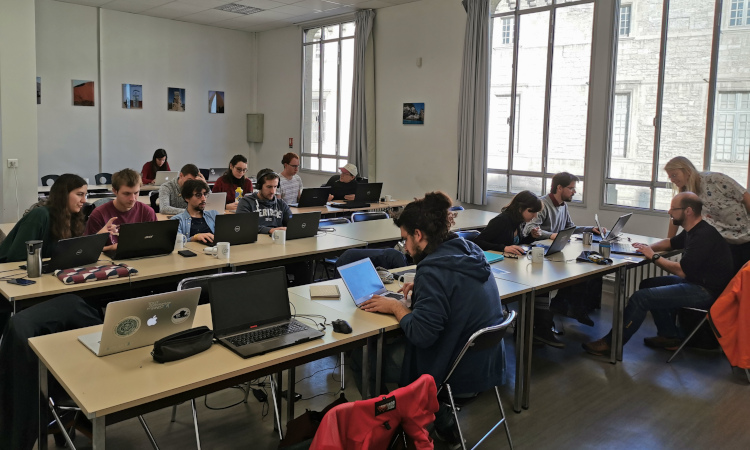
From 2 to 6 December, the FRB’s Center for the Synthesis and Analysis of Biodiversiry (CESAB) and the GDR EcoStat organised a training course entitled Data Toolbox for Reproducible Research in Computational Ecology.


17 students, engineers and researchers from all over France came to attend this training at CESAB’s premises in Montpellier.


Nicolas CASAJUS (FRB-Cesab), Stéphane DRAY (CNRS LBBE), Olivier GIMENEZ (CNRS Cefe), Loreleï GUÉRY (IRD Marbec), François GUILHAUMON (IRD Marbec), Nina SCHIETTEKATTE (EPHE Criobe) presented the essential tools for reproducible research (git/GitHub, rmarkdown, drake, R packages, etc.). Participants put into practice the knowledge acquired at the beginning of the training through projects in sub-groups. Everyone left satisfied with this experience.


Building on this success, a second edition will be organised in 2020. Subscribe to the newsletter of the FRB and its CESAB to be kept informed.


Formation Cesab décembre 2019

retour en haut de la page
fermer

English version coming soon

To ensure the quality of our scientific content, we are currently finalizing the translation of this page.
It will be available for consultation very soon.

Retour à l'accueil (FR)