Breaking down individual stakes to enable change


There is a growing body of scientific knowledge, expertise and experience. Do we have the tools we need to preserve biodiversity?


Knowing does not mean being able to act. Let me explain.

At first, I worked on tropical forests. I gradually saw trees disappear from my dataset, without understanding why. Since 20021, we have known that the disappearance of tropical forests is mainly driven by three factors: agricultural expansion, infrastructure development and timber extraction. These phenomena are themselves linked to underlying factors related to the economy, demographics, technologies, governance and culture.
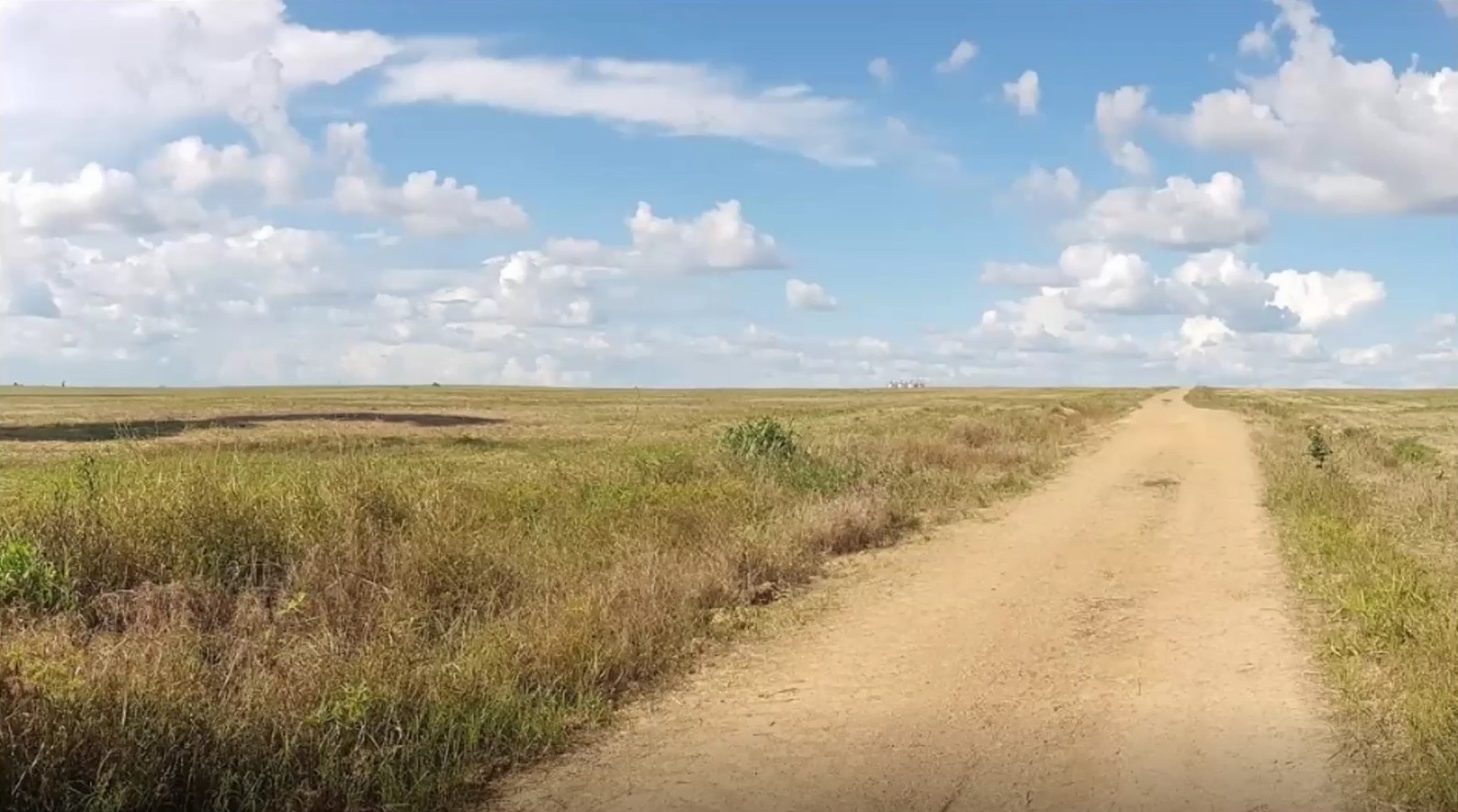
 

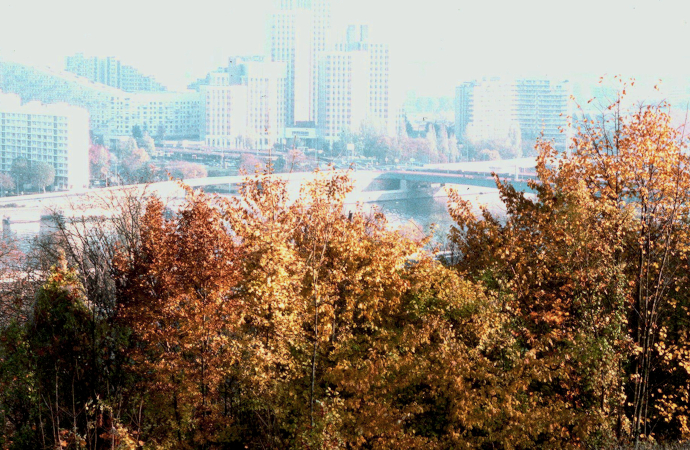
Photograph of “the Amazon that does not look like the Amazon” by Claude Garcia.


So, we have known the mechanisms of deforestation for more than twenty years, yet we are still unable to halt it. Looking at global targets and reports, the same observation could be made about climate or biodiversity: we are getting better and better at understanding what is happening, but this knowledge alone is not enough to halt or reverse the trend.


So why do you think we are failing? Is it a lack of political will?


Not only that. To return to tropical forests, look at how, since 2021, several newspapers have been reporting that the Amazon, the forests of Central Africa, or even the French forest, “now release more carbon than they store”.

These choices of words inadvertently conceal key actors: it is not the forest itself that has started releasing carbon, but people who, by exploiting the forest, are responsible for these emissions. This framing, which leaves human action out of the picture, is actually quite telling.
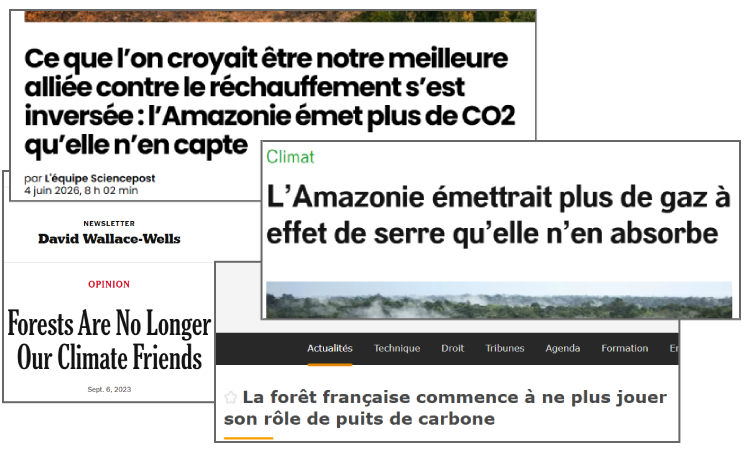
 

A selection of articles from SciencePost, Reporterre, the New York Times and Actu-Environnement.


We therefore need to go back to the source! I was surprised to discover that even Karl Marx had asked himself this question. In his “Critique of the Gotha Programme”2, he emphasized that there is no separation between nature and society: it is nature, not labour, that is the source of all wealth. Without nature, there is no economy. This was in 1875! So nature is the source, and that is our starting point. But today, the future of forests depends above all on the choices that women and men have made, are making, and will make in the years to come. This is, ultimately, what the Anthropocene is about. We therefore need to take a closer look at those who make these choices: we are all actors at different scales. This echoes the words of Richard Thaler, winner of the 2017 Nobel Prize in Economics: “To do good economics, you have to keep in mind that people are human.” The same applies to environmental policies: what is often missing from our policies and the models that underpin them are the humans and their interactions.


What if we tried to build a model that incorporates humans…

Let’s start with the most obvious element in a system: what we can see, namely the physical landscape (forests, mountains, rivers, roads). This system is inhabited, among others, by humans, who bring with them their social and political environment (norms, institutions, practices, social relations). These actors interact with one another, perceive their environment and act upon it. However, they do not all do so in the same way: their decisions depend on what they want, what they know, and what they think will happen or what others will do.

We thus obtain a representation of an ecological and social system, itself surrounded by other similar ecological and social systems, all interconnected (through exchanges of matter and information). External factors then affect the systems directly at different levels (global: climate change; regional: rainfall; local: fires or floods), or influence actors’ decisions (global: market fluctuations, technological innovations; regional: migration, political instability; local: needs and demands, governance).

So this is a first glimpse of what a model incorporating humans and their mental universe might look like!
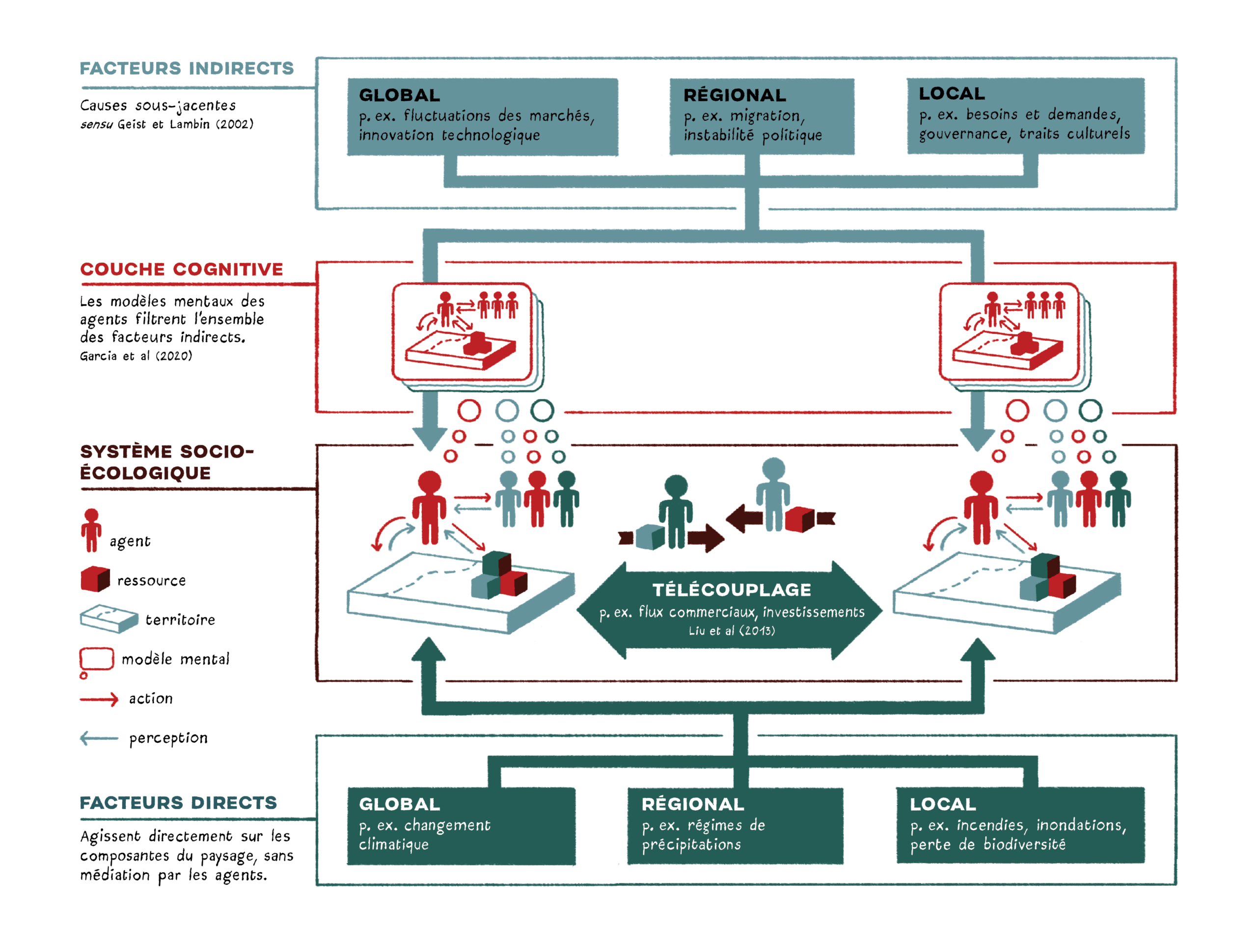
 

Representation of a complete social-ecological system, by Sylvain Mazas.


Why are interactions between humans so important?


Environmental problems are very often problems of strategic interactions, meaning that what one actor gains or loses depends largely on what others will do, not only on their own choices. This is true of almost all environmental policies. When a government wants to protect a species or limit the use of a substance, it depends on the decisions of those to whom the measure applies. One could say that “the forestry code protects the forest”. But it is not the code that protects the forest; it is the people who enforce it. Without them, the code is just a pile of paper good for propping up a table!


Let’s take a brief detour through game theory, the science of strategic interactions: it seeks to understand how the decisions of some depend on those of others. My work consists in making these concepts accessible and useful to decision-makers who have to act in specific territories, in situations marked by uncertainty and conflicting constraints.


More concretely, how can we represent and better take into account these personal interests?


We can map them! Let’s take the example of my early work on coffee plantations in India. Within these plantations, we can distinguish two groups of actors:

  • the plantation owners, who own the plantations;
  • and the workers who harvest the coffee on behalf of the owners.

Let’s assign them a “dependency” score ranging from 0 (not dependent at all) to 5 (highly dependent).


If we look at coffee production, the plantation owner is highly dependent on it: their standard of living, that of their family, and their retirement are linked to this production. We can therefore assign them a very high level of dependency. For the worker, the situation is different: their personal interest is more closely linked to their wages (regulated by law) than to production itself. Of course, if the plantation goes bankrupt, they will suffer the consequences, but the effect is indirect.

If we now look at firewood, the situation is reversed. For the worker, this resource is essential. For the plantation owner, who has access to gas and electricity, it is much less important.


Services provided within the same ecosystem therefore do not have the same value for everyone.
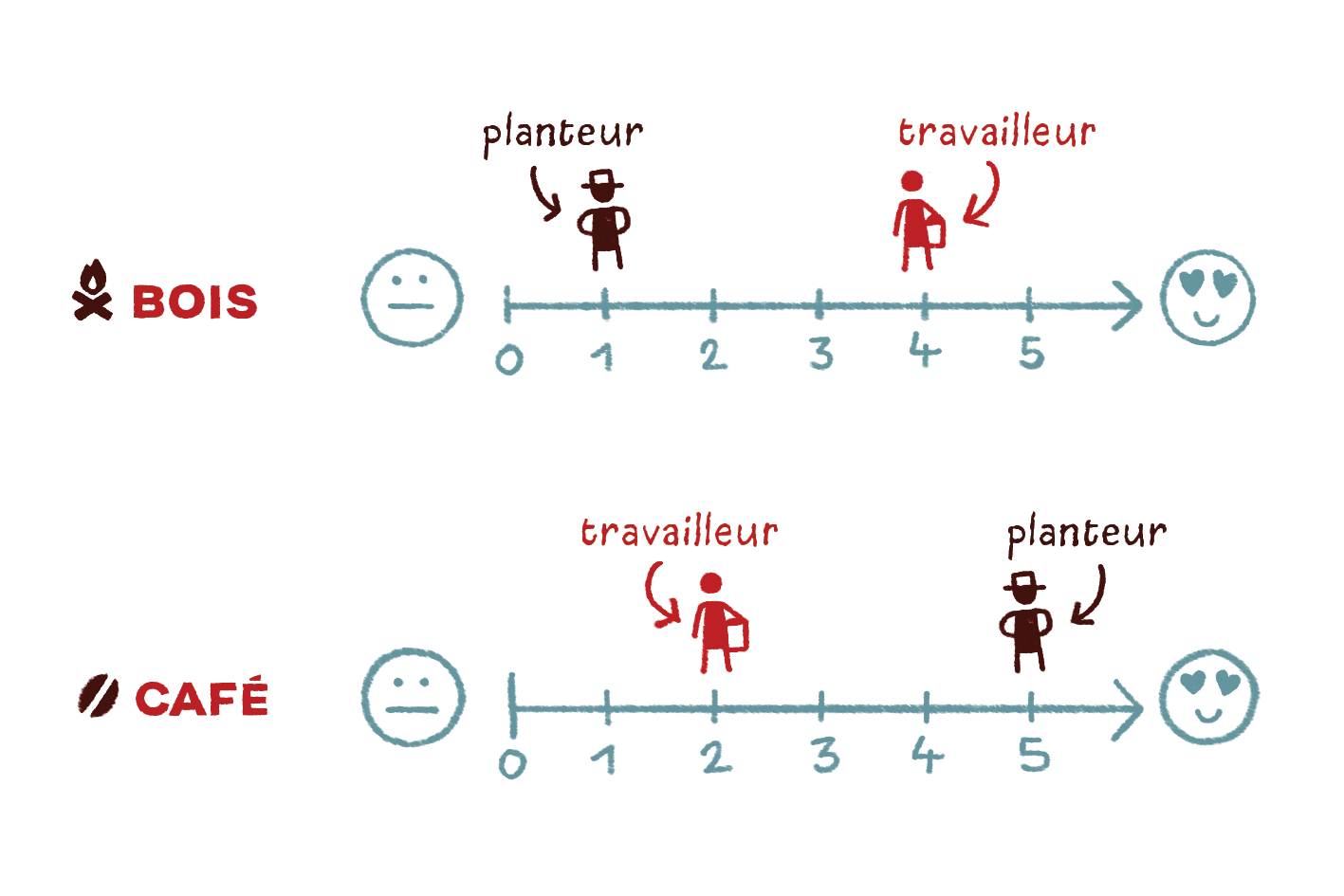
Differences in dependency on the resource according to the actors. Illustration by Sylvain Mazas.


In this way, we can map the dependency of different actors on different services provided by a territory. This allows us to make commonalities and divergences visible: who can form an alliance with whom? Who is likely to enter into competition? Who is most dependent on the territory?
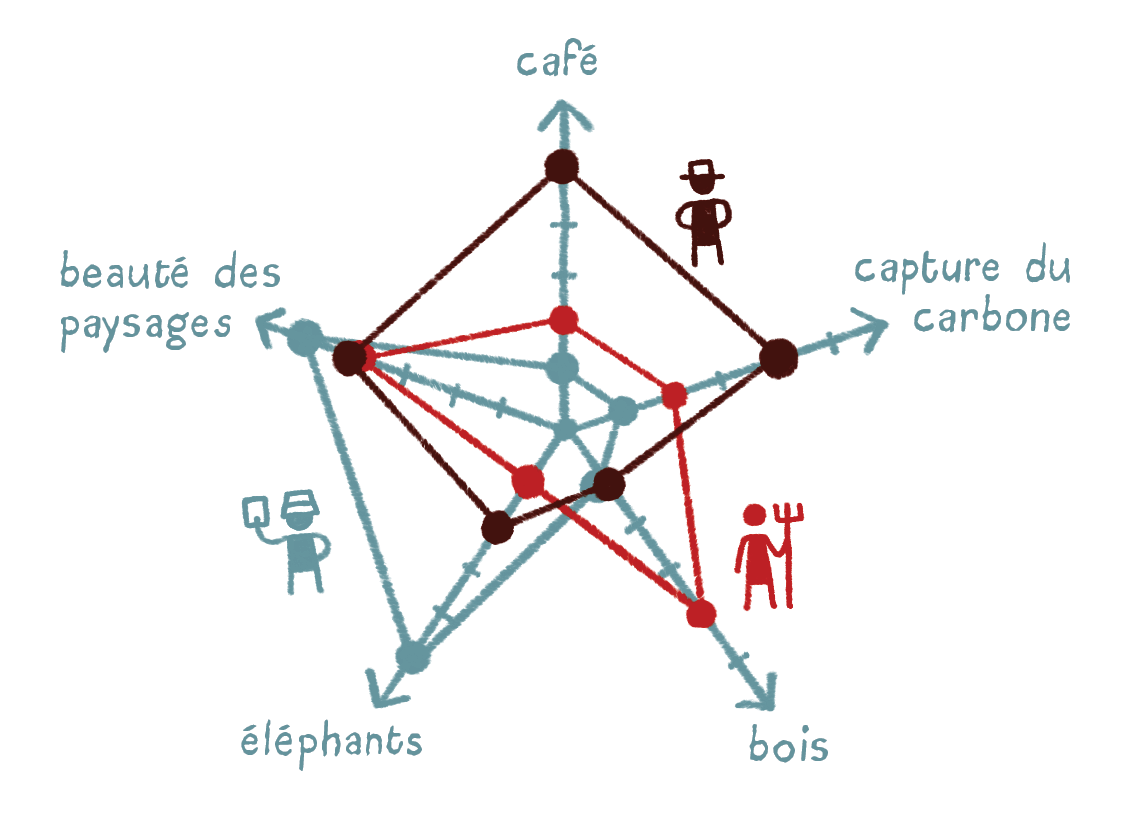
Differences in dependency on a territory’s services according to the actors. Illustration by Sylvain Mazas.


We can then track how these dependencies evolve and compare the interests of different actors under several possible futures. In a scenario favouring coffee plantations, or in another prioritizing forest protection, the winners and losers will not necessarily be the same depending on the service considered.


This is why I do not think we can talk about relationships with nature without also talking about power relations, interests and dependencies between actors. The language of ecosystem services does not make class interests disappear.


Ultimately, what does this change in the way we approach ecology?


We cannot simply document the disappearance of species. We need a more humanistic ecology, attentive to the humans at the heart of these systems, to their knowledge, beliefs, interests and room for manoeuvre. This is also how we can make action possible and effective.


To finish with an image, let’s talk about fruit. Ecologists have long been accused of being watermelons: green on the outside, red on the inside, as if ecology were merely “a cover for pushing through a communist programme3”.

As an ecologist, I would almost suggest the opposite. It can be useful to draw on certain analytical tools derived from Marxism, particularly its focus on classes, interests and power relations, not necessarily to adopt its political project, but to better understand why different social groups do not have the same relationships with, or interests in, nature.

In other words: red on the outside, green on the inside. Kiwis, in a way!

Ecology as a kiwi. Illustration by Sylvain Mazas.


_______________________________


Références dans le texte

1. Geist, H. J., & Lambin, E. F. (2002). Proximate causes and underlying driving forces of tropical deforestation: Tropical forests are disappearing as the result of many pressures, both local and regional, acting in various combinations in different geographical locations. BioScience, 52(2), 143-150.

2. Marx, Karl. 2008. Critique du programme de Gotha. Traduction de l’allemand par Sonia Dayan-Herzbrun ; appareil critique, bibliographie et index établis par Jean-Numa Ducange. Paris : Les Éditions sociales, coll. « GEME », 144 p.

3. Source : Actualité TFI Info “Gauche pastèque” : Olivier Véran a-t-il repris une expression “inventée par Jean-Marie Le Pen” ? par Caroline Quevrain. Publié le 25 juillet 2022.

Beyond economic factors: The role of social behaviour in the establishment of protected areas

Collective behaviour as an explanatory factor

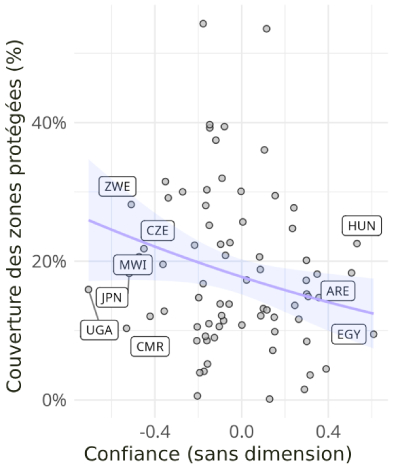
The researchers analysed data from 71 countries by combining international surveys on human behaviour with geographic data on protected areas.

Four behavioural dimensions from the Global Preferences Survey were examined: trust in others, altruism, patience, and willingness to take risks.

Only one of these traits showed a significant association: countries where individuals reported higher levels of trust in others tended, on average, to have a lower proportion of protected areas.


Figure. Negative relationship between trust in others and the percentage of protected areas. Each dot is a country.


One hypothesis put forward by the authors is that, in societies where interpersonal trust is high, the preservation of natural resources may rely more heavily on informal forms of cooperation, reducing the need for regulatory mechanisms such as protected areas. Conversely, in societies where distrust is more prevalent, biodiversity conservation may more often depend on formal institutional mechanisms.

However, the study focuses on the surface area of protected areas designated according to the criteria of the International Union for Conservation of Nature (IUCN), rather than on their actual conservation effectiveness. As such, it does not determine whether these areas genuinely achieve their biodiversity conservation objectives—a key issue in scientific debates, particularly given the existence of so-called paper parks (protected areas whose protection remains largely theoretical).


A new dimension to consider in conservation policies

These findings suggest that collective behaviour is one of many factors that may influence national conservation strategies. It complements other factors already identified—such as history, institutions, political priorities, and economic resources—that help explain differences in the proportion of protected areas across countries.

These results should not be interpreted as an argument for reducing the extent of protected areas in societies where trust is high. Rather, they reveal an association at the international level without establishing a causal relationship, and suggest that the behavioural characteristics of populations represent an additional dimension for understanding differences between countries.


The primary objective is to improve our understanding of how social factors may influence conservation choices. The study therefore encourages the development of conservation approaches that are better adapted to local social and cultural contexts, rather than assuming that a single model can be applied with equal effectiveness across all countries.


Further reading – Learn more about the Spatman project

Journée FRB 2026 | Entreprises et biodiversité : La recherche comme cap, l’action comme responsabilité

Bien que sa nécessité ne soit plus à démontrer, sa mise en place implique des engagements pour toutes et tous. Le dernier rapport de l’Ipbes – le « Giec de la biodiversité » – sorti en février dernier, dresse un portrait complet des responsabilités mais aussi des opportunités qui s’ouvrent aux entreprises, analyse les outils à mobiliser par celles-ci, par l’État et la société civile, leur rôle-clé. Il porte un message fort : transformer l’essai est possible !


À travers cette Journée FRB, en français, la Fondation apportera son regard sur ce rapport majeur, en réunissant communautés scientifiques et parties prenantes publiques et privées afin de discuter des avancées permises par le rapport, des responsabilités mais aussi des opportunités pour les entreprises, les acteurs publics et les citoyens et citoyennes. Les échanges seront l’occasion de confronter connaissances théoriques et réalités de mises en pratique.


Comme chaque année, la Journée FRB s’adresse aux acteurs de la recherche ainsi qu’aux acteurs privés et publics dans l’objectif d’initier et favoriser un indispensable dialogue. Ce temps fort s’appuiera sur une série de rendez-vous qui se tiennent tout au long de ce premier semestre 2026 ainsi que sur la plénière de l’Assemblée des parties prenantes de la FRB, ouverte aux structures membres de l’Assemblée des parties prenantes, conviés pour l’occasion dès le 22 juin après-midi. 


Inscrivez-vous


Suite à un changement de lieu, l’événement est ouvert en présentiel à toutes et tous

[FRB-CESAB] Blue and Green Justice

Traditional conservation approaches have typically focused solely on ecological aspects. However, a growing body of research shows that the success of conservation policies depends as much on governance, power dynamics, and underlying principles of justice as on the biological mechanisms they aim to protect. Despite this, the interactions between these dimensions remain poorly understood and are often studied in isolation.


Drawing on the findings of four FRB-CESAB research projects, this conference explores the emerging concept of Blue and Green Justice in biodiversity conservation. Each project used distinct methodological and disciplinary approaches, yet all shared a common goal: to examine how stakeholder engagement in conservation processes can strengthen the protection and resilience of terrestrial and marine ecosystems.


The conference will take place on December 15 at 2:00 PM (Paris time) and will be conducted in English. Attendees are invited to join in person in Paris. Attendance is free, but registration via the form below is required.


Register for the conference


Learn more about the projects


The program will begin with the PARSEC project, which combined satellite imagery, socio-economic data, and artificial intelligence to quantify the global impacts of protected areas, particularly on poverty. In parallel, PARSEC collaborated with the MPA-Poverty project — funded by the ANR and led by CEE-M — which resulted in a case study focused on fisheries in Tanzania.


The discussion will continue with the BLUE JUSTICE project, which explored the global connections between equity, marine policies, and the resilience of coastal communities, especially under the combined pressures of climate change, conservation, and development.


Complementing this, the JUSTCONSERVATION project synthesizes 50 years of empirical literature (662 case studies), providing robust statistical evidence that governance led by Indigenous peoples and local communities significantly improves ecological and social outcomes.


Finally, the POWERBIODIV project examines a dimension long theorized but rarely operationalized: power. Using a multidimensional framework combining systematic reviews, network analyses, and modeling, the project investigates how visible, hidden, and systemic forms of power influence participatory processes and their outcomes.


You have missed the conference?

The talks have been compiled in this article!

POWERBIODIV | Navigating Power in Participatory Process for Biodiversity Conservation: A Tool for Thought

Participatory approaches are increasingly used in biodiversity conservation to build trust, reduce conflict, and create more lasting decisions. By bringing together diverse voices (local communities, scientists, policymakers, NGOs) they aim to shape strategies that protect both people and nature.

But more participation does not automatically mean better outcomes.

Power matters.

When power dynamics are overlooked, participation can become superficial, reinforcing old inequalities and even deepening tensions. Power shapes who is heard, whose knowledge counts, and who is left outside decision-making. If we don’t name and reflect on these dynamics, we risk failing the very goals of fairness and impact that participatory processes aim for.

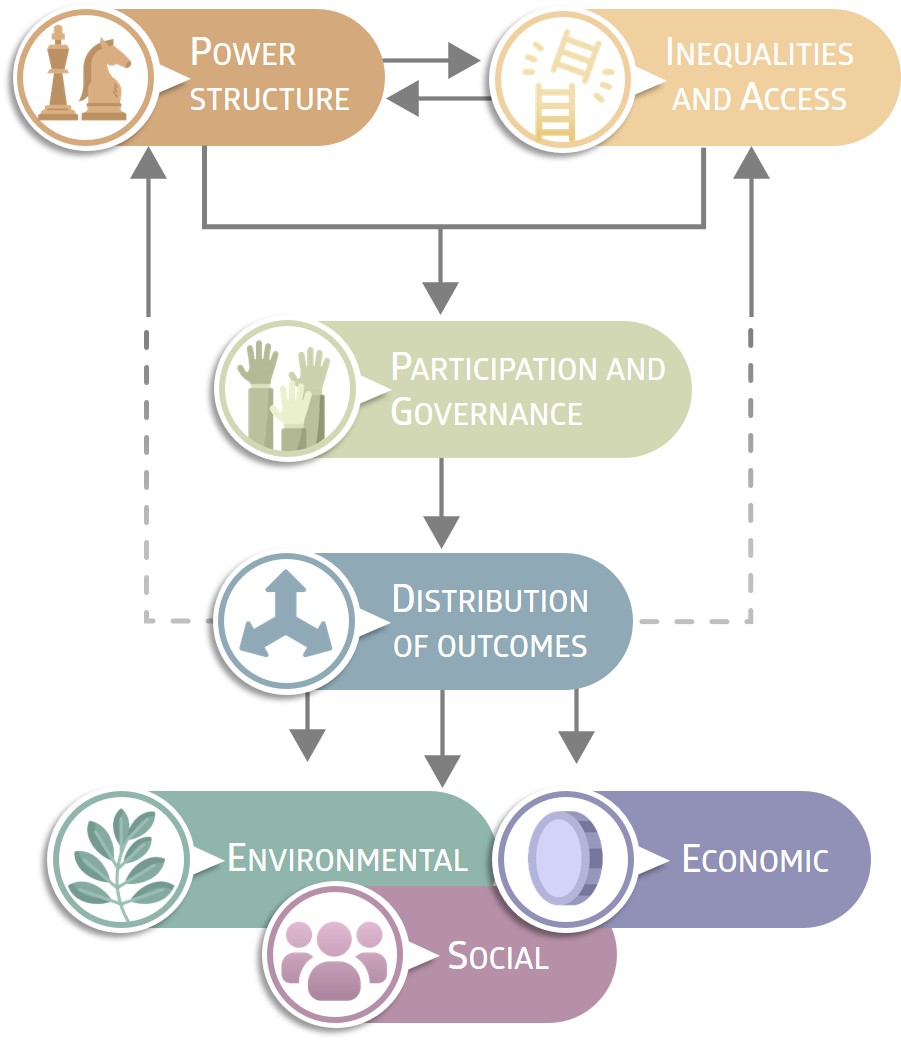
This Tool for Thought invites conservation practitioners, researchers, and facilitators to reflect more consciously on how power operates in participatory settings and how we might respond with greater care and imagination. It introduces a shared vocabulary to talk about power clearly and constructively. It proposes key concepts, and reflective questions to help make power
more visible, more easy to talk about openly, and more actionable.


This resource is for anyone who works, or aspires to work, at the intersection between biodiversity, participation, and social change.
It speaks to:

  • Conservation practitioners managing biodiversity and natural resources in collaboration with communities
  • Researchers exploring biodiversity, social-ecological systems, and participatory approaches
  • Facilitators designing and leading participatory processes across diverse settings


But it also offers insights to those shaping the conditions for participation:

  • Policy makers who commission participatory processes and seek to design them more inclusively
  • Advocacy leaders, project designers, and funders thinking about how power affects whose voices are heard and whose knowledge is valued
  • Institutional actors committed to shifting practices toward more equity, justice, and shared stewardship.


Rather than offering strict categories, this Tool for Thought invites a moreluid perspective: wherever you sit on the ground, in research, at policy levels, or inbetween, you are part of shaping how power flows through conservation efforts.


Associated content:

POWERBIODIV Narratives | Staying in the Room: Stories of Power and Participation in Conservation

This booklet brings together a set of real-world case studies, each exploring how participatory processes unfold in conservation settings — and how power is entangled in every step.

Written by those directly involved in or observing these processes, these stories come from landscapes as varied as the Andes, the Pyrenees, the Scottish moors, and the forests of Mexico. They describe efforts to bring together communities, governments, scientists, and civil society actors to co-create responses to complex environmental challenges.

But more than technical achievements or policy innovations, these stories highlight the relational, emotional, and political dimensions of participation. They show that trust takes time. That silence and absence can be forms of power. That listening well matters. And that small shifts — a new question, a reframed agenda, a handwritten agreement — can carry the
seeds of transformative change.


These narratives were written in the context of the PowerBiodiv project, an initiative aimed at exploring how participatory biodiversity governance can be made more just and inclusive by attending explicitly to power. If you wish to learn more about the power framework and its different dimensions (visible, hidden, invisible and systemic power; power to, power with, power within, power for; spaces and level of power), we invite you to consult the accompanying handbook and visual tools developed as part of the same project.


We hope these stories invite you not only to reflect, but to stay in the room — and keep working toward more power aware and grounded forms of conservation.


Associated content

JUSTCONSERVATION | Towards ‘just conservation’: linking theories and practices of justice in biodiversity conservation

Over the past three decades, biodiversity conservation has expanded, from a focus on nature preservation alone, to more ‘people-friendly’ approaches integrating objectives for both conservation and human well-being, as visible in the governance of protected areas and other conservation measures worldwide. However, integrated approaches have not necessarily led to benefits to local people, giving rise to a further shift from a focus on economic development, to one on social justice. This FRB-CESAB research project called JUSTCONSERVATION analyzed how justice concerns find support and integration in biodiversity conservation; a research need which is currently under-addressed. It asks:

  • how different conceptualizations of justice and equity influence the governance of protected areas and other effective conservation measures?
  • to what extent and through what mechanisms the integration of social objectives in conservation governance influence conservation effectiveness?
     

This document summarizes in a few pages the group’s context and objectives, the methods and approaches used, the main findings, as well as the impact for science, society, and both public and private decision-making.

retour en haut de la page
fermer

English version coming soon

To ensure the quality of our scientific content, we are currently finalizing the translation of this page.
It will be available for consultation very soon.

Retour à l'accueil (FR)