The FRB at a glance
From research to society, in favor of biodiversity
The FRB was created in 2008, following the Grenelle Environment Forum, at the initiative of the ministries responsible for research, the environment, and scientific organizations. It contributes to the development and impact of biodiversity research by bringing together institutions that organize public research and stakeholders, by mobilizing academic skills and knowledge in response to societal demands, and by promoting multidisciplinary and collaborative approaches with businesses and private research.
At national, European and international levels, it is not only a funding window for research, it is also a platform enabling dialogue with public and private stakeholders.
The FRB is a private scientific cooperation foundation that operates independently and employs around forty people. It pays particular attention to current societal issues such as well-being at work, gender equality , etc.
The founding members of the Foundation include BRGM, Cirad, CNRS, Ifremer, Ineris, Inrae, IRD, the National Museum of Natural History, LVMH, the University of Montpellier and OFB.
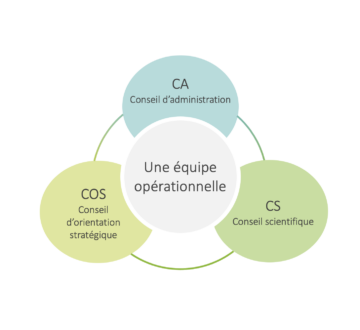
A Scientific Council and a Strategic Guidance Council support the Board of Directors , which has been chaired since January 2021 by Denis Couvet .
The general management of the Foundation has been ensured by Hélène Soubelet since April 2017.
The operational team consists of about forty people with complementary skills.
Governance and organizational chart
2024 allocation
of ressources
- European Union : 29 %
- Ministries : 25 %
- Other funding : 19 %
- Founding members : 13 %
- Private funding : 12 %
- Research funding body : 2 %
With a comprehensive vision of biodiversity issues, the FRB is committed to strengthening the influence and relevance of biodiversity research in direct relation to current societal challenges.
Its priority areas of work include gaining a better understanding of biodiversity in all its dimensions, contributing to a more sustainable future, and developing collaborative research. In France, Europe, and internationally, it facilitates essential dialogue to bring together academic knowledge, societal challenges, and regulatory frameworks.