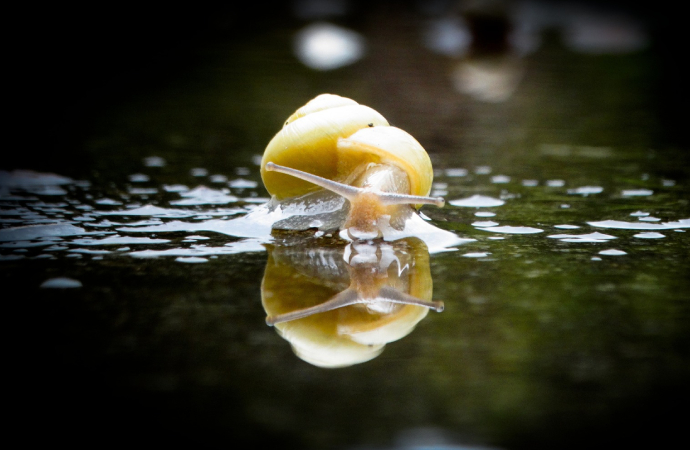
A small animal to think big: why take an interest in snails?
When we think of snails, we think of the ones in the garden after the rain, or those on our plates. Yet freshwater snails are fascinating organisms: there is an immense diversity of species, shell shapes, and lifestyles. From a scientific perspective, they are a perfect example of species at the crossroads of biological invasions, climate change, and even human health (yes indeed!), which makes them particularly interesting to study.
You mentioned their role in human health: could you tell us more?
This is a lesser-known aspect: freshwater snails are the third deadliest animals for humans, after mosquitoes and snakes. Their responsibility stems from the fact that they serve as intermediate hosts for certain parasites, notably those causing schistosomiasis and fasciolosis.
- Schistosomiasis, for example, affects between 150 and 240 million people each year. The parasite passes through the snail before infecting humans through contact with water. In Perpignan, an associated laboratory worked on parasite-resistant snail lines. We demonstrated lower fecundity in the resistant lines. This association is consistent with the hypothesis of a trade-off between immunity and reproduction, although other mechanisms may also be involved.
- Fasciolosis mainly affects livestock. It leads to considerable economic losses, amounting to several billion euros per year, as it impacts milk, meat, and wool production. Differences in prevalence across regions are directly linked to the local presence of snail vector species.
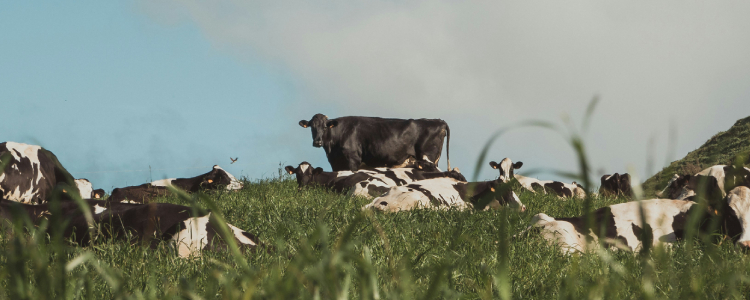
Photo credit: Marco Fernandes, Unsplash
These studies illustrate the concept of One Health: human, animal, and environmental health are deeply interconnected.
You also mentioned biological invasions. Given how slowly snails move, it’s hard to imagine them going very far! How exactly do they disperse?
Snails travel much more than one might think. In a “natural” way, they can be transported on the feet of birds. However, their mobility is mainly driven by the aquarium trade, which moves numerous species around. This creates new challenges for ecosystem health with the introduction of invasive alien species such as Physa acuta, which alter local balances and can reactivate disease cycles.
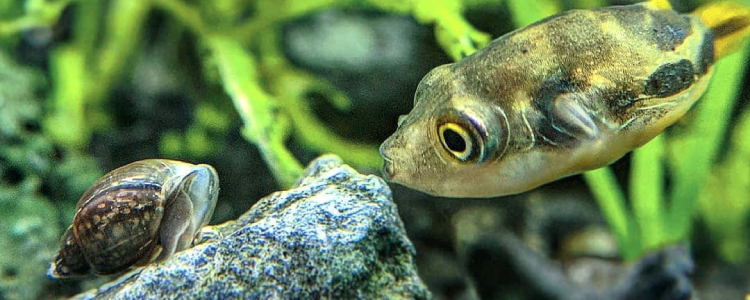
Physa acuta and a tetraodon fish in an aquarium.
In some regions, these introductions have encouraged the re-emergence of fasciolosis, the disease mentioned earlier. In others, local species, confronted with these competitors, rapidly modify their life cycle: they reproduce faster, live shorter lives, or move to other habitats.
These rapid responses show just how finely and quickly aquatic organisms respond to biological pressures.
Okay for human health and biological invasions… but what makes snails particularly interesting to study in relation to climate change?
Some snail species, such as Galba truncatula, a vector species for fasciolosis, now live in more temporary habitats subject to seasonal drying. Indeed, climate change is altering the availability and “temporality” of freshwater.
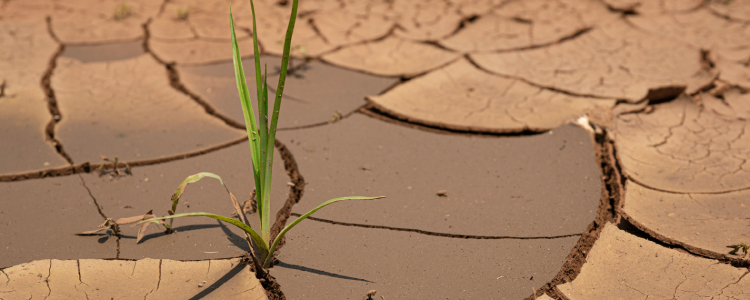
Photo credit: Carlett Badenhorst, Unsplash
Studies show that these snails adapt their life-history traits: they are larger and more resistant to desiccation (loss of body moisture). Even with low genetic diversity, they manage to adjust their physiology to climatic variability.
This type of plasticity constitutes a warning signal for managers: transmission cycles and parasite distribution may already be influenced by ongoing climate changes.
Snails appear as early indicators of ecological transformations associated with climate change, sometimes detectable at the local scale before they become visible at larger scales.
By using snails as models, what can they concretely teach us?
They are complex models. Climate, invasion, pollutants, economy, health… None of these phenomena acts in isolation. Climate influences snail reproduction; invasive species alter parasite cycles; pollutants (such as microplastics) disrupt host–parasite interactions… All these interactions illustrate the need for integrated and transdisciplinary approaches.
For companies and local authorities, this sheds light on several strategic areas:
- Sustainable water management: snails as bioindicators of environmental quality.
- Health surveillance: early detection of water-related zoonotic risks.
- Climate impact assessment: understanding biological responses to hydrological variability.
- Invasion prevention: managing species flows in activities related to aquaculture, aquatic plants, or ecological restoration.
Small but important: snails as sentinels of the Nexus (i.e. climate, water, biodiversity, food, health)?
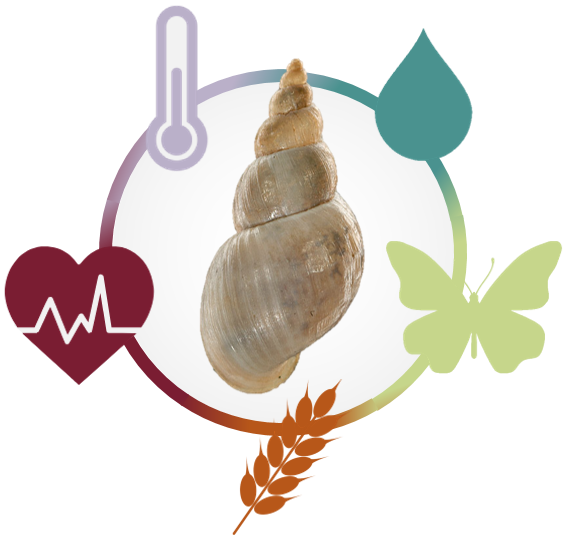
Beneath their apparent slowness, freshwater snails embody the planet’s major dynamics: the relationships between water, health, biodiversity, climate, and human activities.
Understanding them means anticipating ecosystem transformations and guiding sustainability and biodiversity management strategies. Where one might see only simple mollusks, I see valuable allies for thinking about the balances of the future!