Home > The FRB in action > The FRB’s programs & projects > Impact of renewable energy on biodiversity > Onshore wind energy
The FRB in action
Onshore wind energy
Effectiveness of solutions and recommendations to limit the impact of onshore wind energy production on flying biodiversity.
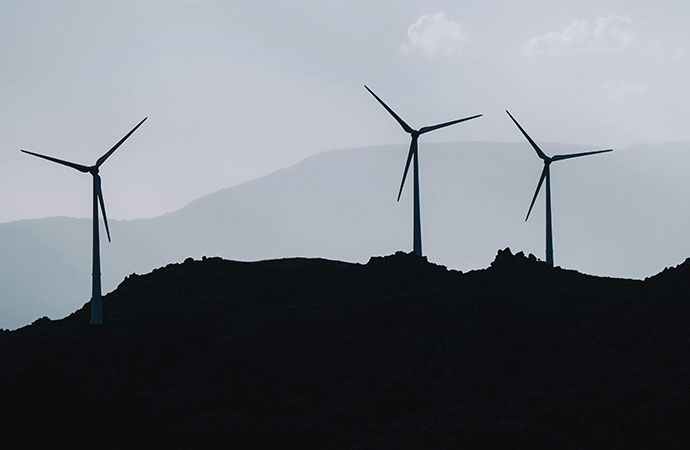
Since the deployment of the first onshore wind installations, controversies have emerged regarding their economic and environmental costs and benefits.
The International Renewable Energy Agency has established an optimistic plan according to which decarbonized electricity production from renewable energy should increase from 25% in 2017 to 85% in 2050. In the context of the climate emergency, the energy transition towards renewable sources is essential to limit greenhouse gas emissions. Onshore wind energy, which is rapidly expanding, plays a crucial role in this transition.
Driven also by technological progress, economies of scale, competitive supply chains and the expertise of developers, the costs of renewable electricity have significantly decreased over the past decade, fostering socio-economic and human development.
However, its rapid development raises environmental challenges, particularly in terms of negative impacts on flying wildlife.
Focus on the impacts of onshore wind installations on biodiversity
The main impacts of wind energy occur during the construction and operation phases.
Habitat loss caused by the clearing of forested areas during the construction phase has negative effects on forest animal species.
During the operational phase, the main disturbances caused by wind turbines are due to rotor movement, noise, vibrations, flickering lights and increased human presence.
These disturbances lead, in many animal species, to:
- Direct mortality through collision;
- Indirect mortality through the reduction of habitat quality and resource availability near wind turbines;
- Behavioral changes such as avoidance and modification of flight paths, particularly among migratory species. These avoidance actions can occur at different scales: at the level of the entire wind farm, within it, or in the immediate vicinity of turbines.
The need to assess the measures implemented to mitigate the impact of onshore wind turbines on flying animal species
Finding operational solutions and assessing the effectiveness of these solutions and recommended measures to minimize the impacts of onshore wind energy on flying biodiversity is essential. In general, the measures identified to mitigate the impact of wind turbines on biodiversity include a variety of approaches adapted to different contexts.
Among these measures are:
- Mortality prediction;
- Micro-siting and macro-siting, which aim to optimize the placement of wind turbines;
- Different types of curtailment: increasing turbine cut-in speed thresholds, adjusting blade orientation, selective shutdown, and integrating advanced technologies;
- Various deterrent devices: acoustic using ultrasounds, combined acoustic and light systems, mid-frequency acoustic systems, radar, and UV light;
- Structural modifications to turbines, such as varying rotor diameters, painting wind turbines, or applying textured surfaces;
- Global strategies such as wind farm repowering (repowering) or the removal of ecologically attractive factors;
- The effect of night-time aviation safety lighting has also been evaluated.
The solutions presented in this publication have shown a certain level of effectiveness in specific studies, limited to particular contexts and species.
Recommendations to reduce risks to biodiversity
This work presents a synthesis of recommendations specifically developed for three major groups of stakeholders: the scientific community, the government decision-makers and wind energy operators. These proposals aim to reconcile the imperatives of the energy transition with the need to preserve flying biodiversity. The responsibility of operators, planners, states or developers is to understand these impacts, reduce their magnitude, and communicate about their risks and dependencies on biodiversity.
For the scientific community
The scientific community working on the impacts of onshore wind energy on flying biodiversity can support the development or improvement of risk-reduction technologies. These recommendations will improve knowledge and therefore the effectiveness of the measures implemented.
For project developers and operators
As with the entire private sector, wind turbine developers and operators must monitor, assess and regularly disclose, in a transparent manner, their risks, dependencies and impacts on biodiversity across their supply and value chains, and provide the necessary information to consumers in order to:
- promote sustainable consumption patterns;
- gradually reduce negative impacts on biodiversity;
- increase positive impacts;
- reduce biodiversity-related risks.
For states and government agencies
States, and more broadly public authorities, must ensure that operators and developers comply with their biodiversity obligations in order to protect the species and ecosystems on which our quality of life depends.

Ressources
ouvrir/fermer
Access the bibliographic portal
More information
This publication was produced as part of the programme “Impact of renewable energy on biodiversity”. This research project funding programme led by the Foundation for Biodiversity Research (FRB) and the Mirova Research Center aims to better assess the impact of renewable energy on biodiversity and to produce operational recommendations on best practices for stakeholders in the sector. More information
Resources - Solutions and recommendations